July Openeds Reviews

Ah July, nearly the height of summer here in Colorado. It’s been dry and smoky (seemingly the new normal in the Western US), and my skincare has been reflecting that — there’s a strong focus on antioxidants and sunscreen below. As always, products are listed in the order you would theoretically use them in a routine. Stay tuned for later this month, when my husband will give a more in-depth review on some of them!

Fresh Soy Face Cleanser

This was really my first “grown-up” cleanser when I first tried it years ago, and I remember loving the cucumber smell of it, so I picked it up for my husband when he started getting more into skincare. (He doesn’t enjoy using it, which is why it’s now in my routine.) It has coconut-derived surfactants, so it’s quite a gentle cleanse, and of course includes soy protein per its name. It wouldn’t be a Fresh product, seemingly, without rose so it has that, as well as other antioxidants like ginseng extract, aloe juice, cucumber extract (ergo the smell) and vitamin E.
Price: $15 USD / 50 mL; available in a variety of sizes

Isntree Real Mugwort Clay Mask

I’m not much of a clay mask person these days, now that I’ve learned that just letting them dry out is a bad plan if you live in a desert. But this mugwort mask came highly recommended by Kelly Driscoll, so I decided to give it a go. (I have subsequently actually won this in a giveaway from the brand, but this is the tube I purchased myself.) It includes six types of clay, including the usual suspects kaolin and bentonite, but also includes mugwort extract and powder for calming.
Price: $24 USD / 100 mL

Acure Seriously Soothing Blue Tansy Jelly Mask

Having grown up with only stripping clay and peel-off masks, it’s been wonderful to see the proliferation of wash-off masks catering to drier skin types. Since it’s a wash-off mask there aren’t too many long-term benefits, per se, but it helps me tolerate more drying masks like the Isntree Real Mugwort Clay Mask with no ill effects, and the antioxidants (blue tansy, blueberry, seaweed, eggplant and more) are always a nice plus!
Price: $20 USD / 30 mL

Peach Slices Snail Rescue Blemish Toner

This toner is a repeat in my skincare journey, because it’s really hard to beat the price. I’m so far through this already it’s a bit embarrassing, but my skin was thirsty in July! This toner is a pretty medium weight, without any snail gloopiness to it.  This makes it layer up reasonably well. I’ve been doing two layers AM and PM after the Isntree Green Tea Toner and before the Hanskin Hyaluron Essence.
Price: $14 USD / 120 mL

Good Skin Days C’s the Day Serum

Tired of me reaching about this yet? Tough, I still have two more bottles in the fridge. This is a watery, gentle vitamin c that I just can’t quit. 10% ascorbic acid, niacinamide, licorice root and camu-camu really bring some brightening for an overall glow, while ginseng and mushroom make it so hydrating. I love the texture and go through it so fast I barely run into oxidization issues, though I’ve started keeping it in a little bag just to help it stay fresher longer.
Price: $26 USD / 30 mL

Beekman 1802 Milk Drops Probiotic Ceramide Serum

When I bought this on Ulta’s sale I bought two, just in case. This, of course, is the second one. It’s a bit pricier than I like my serums but it has a lovely, lightweight and hydrating feel while nourishing the skin with probiotics and ceramides. There’s a more thorough review in my empties I posted last week!
Price: $45 USD / 28 mL

Facetory Oats Calming Glow Weightless Facial Oil

This is definitely more of a serum than a facial oil. It’s a very white, milky serum thanks to all the oats and rice — rice bran water, oat kernel extract, oat kernel oil. It includes a variety of antioxidants like green tea, rosemary, licorice and lichen; and good oils like linseed, soybean, hazelnut. Fragrance-avoiders beware, this does have quite a scent due to tea tree, bergamot and cedar oils.
Price: $18 USD / 30 mL

Paula’s Choice 10% Azelaic Acid Booster

As my husband continues on his skincare journey, we’ve been trying to take some spots of rosacea that can flare on his cheeks — while this is only at 10%, higher percentages are actually used as clinical rosacea treatments. Despite not enjoying the feeling of things in his face, he seems to not mind a light layer of this all over, and it does seem to already be helping a bit. Personally I’ve only stolen a bit of it, but unrevealed to keep doing so for some of the stubborn spots that retinol and vitamin c haven’t yet corrected. I can see why it’s so popular among the Skincare Fanatics modmin team!
Price: $36 USD / 30 mL

Stratia Liquid Gold

I just wrote about this in July’s empties so I won’t wax too eloquent about it beyond to say that if you’re trying to get someone you care about to wear skincare, start here. It wears so light but has so many good, nourishing ingredients and, of course, the color is a real crowd pleaser. This is my husband’s first rebuy!
Price: $27 USD / 60 mL

Peach & Lily Matcha Pudding Antioxidant Cream

I remember trying a sample of this a year ago and not loving it (simultaneously too thick and not thick enough) but decided to pick it up when it was half off at Ulta. I stand by my earlier take. This makes a good day cream for dry skin or a good night cream for oily skin. It’s got a green tint (thanks matcha!) which helps with redness and a nice smoothing finish to it. I don’t find it to be particularly nourishing, however, so when I use it in the evening I put an oil and sleeping mask over it.
Price: $40 USD / 50 mL

HYGGEE Vegan Sun Cream

I bought this because it’s considered to be a dupe for Krave Beet Shield and … I’m pleased to resort that it basically is! Nearly all the same UV filters, many of the same antioxidant ingredients. The most noticeable difference is that Hyggee is more moisturizing — it comes out more as a cream while Krave was more liquidy — but still feels incredibly light. I’ve got it on my droplist to buy more!
Price: $24 USD / 50 mL

SUNTIQUE I’m Pure Perfect Cica Suncream

I’ve been having such good experiences with Korean sunscreens but not loving the price, so when this big one which some friends had tried showed up at Costco I took the plunge. The good news is I’m halfway through it. The bad news is that’s because I’m using it on my body. This has a matte finish but also has a very tight feeling that accompanies that look, which I found to be uncomfortable — my husband found it so unbearable he immediately washed it off, but finds no issue with it on his arms.  Probably great for oily skin makeup wearers, as part of that finish does seem to have a smoothing effect.
Price: $27 USD / 120 mL in the jumbo size shown (from Costco); $24 USD / 50 mL through most retailers

Make P:Rem UV Defense Me Blue Ray Sun Fluid

I had been using a smaller bottle of this, then decided to get a big one because I don’t love it for my face, but the price was right for body. It can be a bit drying, but it’s light enough that my husband happily wears it and hey, that’s what moisturizer is for anyway. It’s got a bunch of great antioxidants like madecassoside, heartleaf and raspberry extract. It also has a light fragrance to it from some of the oils and extracts in it. I actually opened this last month but then PROMPTLY LOST IT on our Telluride trip, only to discover it again two weeks ago.
Price: N/A; discontinued in its current format and formulation

July Empties Review

You know it’s summer when three of your empties are sunscreen. This review includes some hits, some misses and some holy grails. So let’s jump right into what I finished slathering on my dry skin this month.

Sweet Chef Oat Milk Latte Cleanser

This cleanser has lasted me ages, but it’s a good one — I used it every evening after my first cleanser for months. As you might expect given the name, the hero ingredients in this are from oat in the form of oat milk and oat kernel flour, as well as coffee in the form of coffee seed extract. The oat helps soothe the skin, while the coffee is a good antioxidant — incidentally, it also gives it that funky caffeine taste if you, like me, inevitably wind up getting cleanser in your mouth while rinsing. As a bonus, this cleanser has panthenol, a Vitamin B5 derivative, as well as Vitamin B12. Truly a gentle drugstore cleanser that feels bougie and fun.
Rating: 8/10
Price: $13 USD / 150 mL

Kate Somerville ExfoliKate Intensive Exfoliating Treatment

I’ve been using very gentle, daily exfoliants (Glow Recipe Watermelon Glow PHA +BHA Pore-Tight Toner, Dermalogica Daily Microfoliant) but was feeling the need for a heavy duty exfoliation this month. Since I had a sample size of this from a Kate Somerville order last holiday season, I gave it a go. This is intended to be massaged into damp skin, and then rinsed off after a couple minutes, which I did. And then promptly found it irritating. There’s cinnamal in here which makes it smell like cinnamon candy and made it tingle my cheeks. I also noticed that my skin looked a bit bumpy after I had rinsed and finished my routine. This is why we patch test, folks. I used up the rest of the bottle on my body, where I continued to loathe the smell. I will say, on my upper arms it actually took down my slight KP fabulously, so kudos to it there, I guess
Rating: 1/10
Price: $88 USD / 60 mL; shown in the 7.5 mL sample size

Sephora Collection Watermelon Mask Stick

I got this in 2020’s spring Sephora sale, figuring that at $4 it couldn’t be that terrible. It wasn’t that great, either, though. Like most Sephora Collection products it’s pretty basic, but delivers on being a kaolin clay mask with just a smidge of watermelon extract. While the mask itself was whatever, I wholeheartedly endorse the stick delivery mechanism, which made it easy to spread everywhere without wasting a lot of product because it dried on my hands.
Rating: 3/10
Price: N/A, discontinued

Peach Slices Snail Rescue Intensive Wash-Off Mask

This is not the first time I’ve emptied this mask, and it presumably won’t be the last. Peach Slices really nailed it with their snail line. This wash-off mask has a funky jelly texture due to its use of potato starch as a thickener, but it doesn’t dry out if you, like me, tend to leave your masks on for too long. True to its name it has 95% snail mucin, but also includes centella asiatica extract, licorice root extract, strawberry fruit extract and birch juice for an extra soothing, brightening and antioxidant boost.
Rating: 10/10
Price: $17 USD / 100 mL

Good Skin Days C’s the Day Serum

Another holy grail on the list. This is my go-to Vitamin C due to its 10% ascorbic acid, which they amplify with niacinamide, licorice root extract and arbutin for extra brightening. It also includes camu-camu extract, which is a natural source of Vitamin C, as well as magnesium ascorbyl phosphate, a derivative. White truffle extract, ginseng extract, crocus and hibiscus extracts as well as coptis japonica extract (familiar to lovers of Pyunkang Yul) round this out to make it a truly lovely, hydrating, anti-aging and brightening serum. It does oxidize because of the ascorbic acid, but it’s easy to use up before it does so fully.
Rating: 10/10
Price: $26 USD / 30 mL

Beekman 1802 Milk Drops Probiotic Ceramide Serum

As you all know, I’m a sucker for a ceramide serum — so when this went half-off during an Ulta sale, I picked up two. This serum has a lot more going for it than just the ceramide 3, though. True to all of the Beekman 1802 products, this leans heavily on goat milk. Goat milk, milk probiotics and colostrum (super fancy, early goat milk, basically) feature heavily, and are great for skin soothing and strengthening. Between the lactic acid of the milk as well as apple, aspen bark and willow bark extracts, some might consider this serum to be ever so lightly exfoliating. Personally, I found it to be lightweight and lovely to use, though I would consider it more of a general skin-barrier supportive serum than a ceramide serum per se.
Rating: 8/10
Price: $45 USD / 28 mL

Stratia Liquid Gold

Stratia Liquid Gold is a cult favorite for a reason. It’s quite striking to look at, if nothing else, since the sea buckthorn oil makes it that particular shade of gold. It’s super lightweight, so depending upon your skin type and routine you can use this either as a serum (I like it right before retinol), as an AM moisturizer (why I originally purchased it) or as a PM moisturizer (how my husband uses it). One of the many things that makes Liquid Gold special is its balance of ceramides, cholesterol and fatty acids, all of which are key components to the skin barrier and which it includes in ratios equal to those found in your skin. This is, incidentally, my husband’s first empty — he liked it so much that I let him keep it, though I occasionally stole a few pumps.
Rating: 10/10
Price: $27 USD / 60 mL

Chiasm Skin Wild Being

It’s not every day that you get to use something that was struck by lightning, but it is if you get the first round of this oil — it’s made with oil pressed from a 650-year-old juniper tree that was struck by lightning in Arizona. Keeping with the desert theme, this oil has jojoba infused with desert plants as well as extracts from prickly pear, agave and ocotillo. These make it a very soothing and moisturizing oil, with plenty of antioxidants (like added CoQ10) for good measure. It made me look like a donut every evening, and it was fantastic.
Rating: 8/10
Price: $42 USD / 15 mL

Derma E Skin Restore Advanced Peptides & Collagen Moisturizer

I originally purchased this for my mom, hoping it would be a good, reasonably priced and easily accessible peptide moisturizer. She didn’t care for it, and frankly neither did I. While the ingredients list looks pretty legit — matrixyl & argireline for the peptides; vitamin E, B5, C and A (the latter two a derivatiives); nice antioxidants and oils — the actual usage of it was such a bummer. It was pretty thick, and seemed to pill no matter what I did in the morning. It tended to pill pretty badly in the evening, too, unless I did my facial oil first.
Rating: 5/10
Price: $35 USD / 60 mL

Krave Beauty The Beet Shield

I know it’s discontinued. It continues to break my heart and I can’t wait until they can reformulate and re-release (and figure out their strategy for selling it in the US, for that matter). Super lightweight, super wearable, super lovely on the skin. Luckily my stash continues, so you’ll see more of these opened and emptied in the coming months.
Rating: 10/10
Price N/A, discontinued

OMI – Verdio UV Moisture Essence

I picked this up looking for a Krave Beauty dupe, particularly one at a good price. This uses similar filters and plant extracts to Beet Shield, and the texture and color are similar. Unfortunately this does go on a bit greasier — I find that if I wear glasses with it on, they tend to continually slide down my nose. It also doesn’t reduce redness like Beet Shield does. But the price is fantastic, the packaging is easy to work with, and it’s lightweight enough that my husband wore it occasionally too without complaints.
Rating: 9/10
Price: $9 USD / 50 g

Make P:Rem UV Defense Me Blue Ray Sun Fluid

This was one of the first k-beauty sunscreens I tried, and while I don’t love it for my face, it makes a great body sunscreen (spoiler alert but the large size is in my “openeds”). This is a mineral sunscreen that doesn’t have much of a white cast. It’s got a bunch of great antioxidants like madecassoside, heartleaf and raspberry extract, and a light fragrance to it from some of the oils and extracts in it. This is rated as SPF 50+ PA++++ but I’m not sure if it passed any external validation — they actually just reformulated and made it a combination chemical and mineral sunscreen.
Rating: 8/10
Price: N/A; discontinued in its current format and formulation

Primera Clean Berry Lip Mask

This is a pretty popular lip mask, but is currently nearly impossible to get in the US — I got this as part of a sampler kit last year. It’s quite waxy in texture, so it works well as a mask but not as a lip balm because there’s no hydration or emollience to it. That said, if you put some eye cream on your lips first, it works really well and they won’t dry out, even in the Colorado weather I struggle with.
Rating: 5/10
Price: $20 USD / 17g for the full size

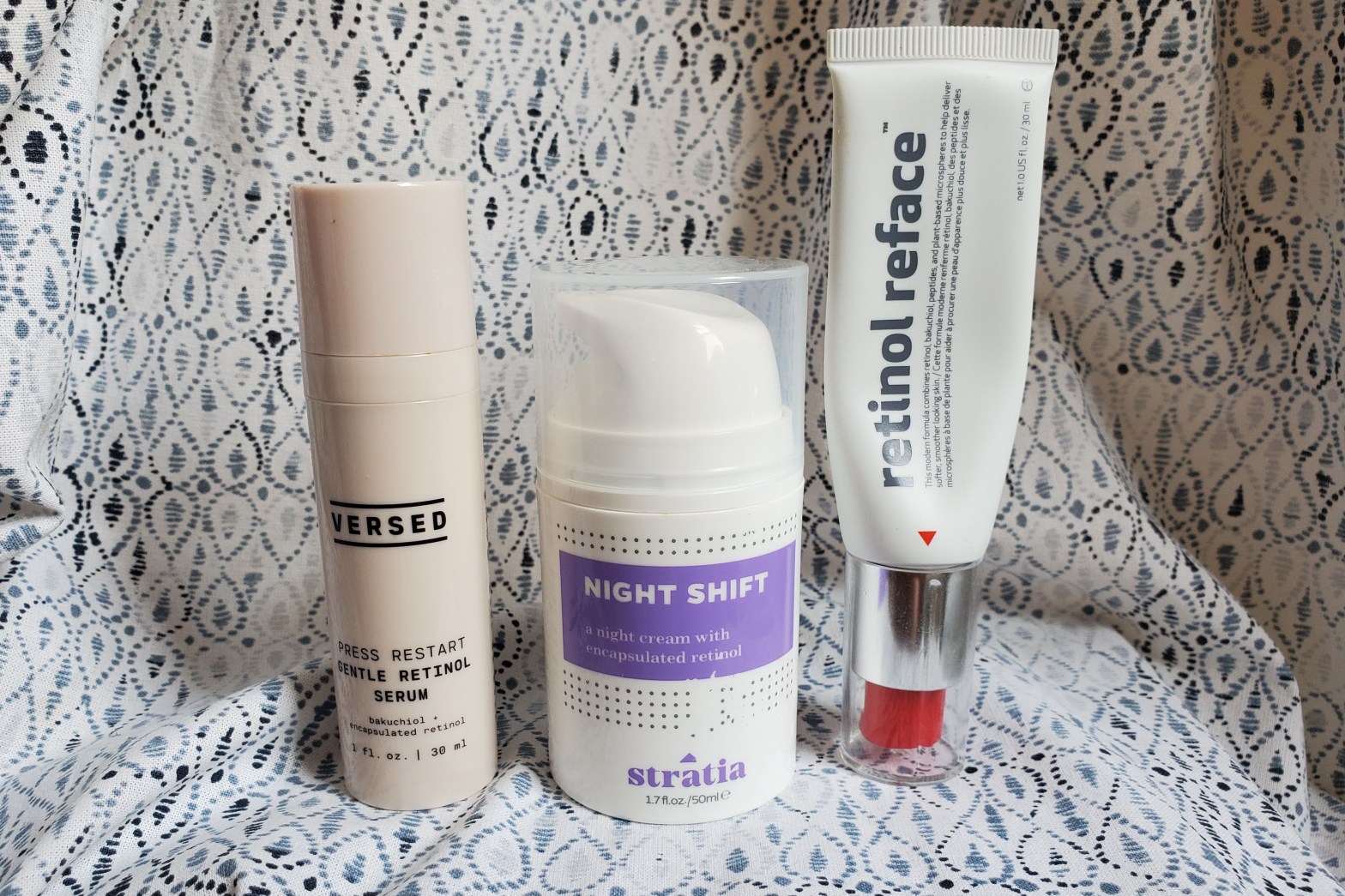
Face Off of the Starter Retinols: Versed vs Stratia vs Indeed Labs

So you’re ready to start a retinol. Maybe you’re dealing with acne, maybe you’re fighting off hyperpigmentation, maybe you’re concerned about the never-ending battle against entropy that is the natural aging process. Bigger isn’t always better with skincare and percentages of actives, so you’ll probably want to start out with a fairly gentle retinol — personally, I love a gentle retinol because I can use it every day and, in some cases, even commit the cardinal sin of exfoliating on a retinol day. (This is, in general, not recommended due to skin sensitivity.)

But First — What is Retinol? And How Should You Start It?

Other folks have said this far better than I could in the scope of this blog, but suffice it to say that retinol is a type of retinoid, which is just a general phrase for a Vitamin A derivative. Your skin converts this to retinoic acid, which then triggers the creation of more collagen, and the increase of the skin turnover rate. This is why you may go through a “purge” period, also known as retinization, when you begin a retinoid — that process speeds up to push out a lot of that “gunk” that was in your skin, plus Vitamin A can be drying, so you may peel a bit.

The benefit to choosing a gentle retinol is that while you may still break out initially, you’re much less apt to flake. It’s also much easier to build up a tolerance — you really should be using your retinoids at least once every three days, which is much easier when they don’t make your face hurt to use. I usually suggest a slow ramp-up schedule, regardless of retinoid strength: once a week for two weeks, then twice a week for two weeks, then thrice a week for two weeks, then do whatever feels good, works with your life and doesn’t make your skin go haywire — for me, it turns out that’s just about every day.

Versed Press Restart Gentle Retinol Serum

This was my first-ever retinol, in part because it was so gentle. This has only .03% encapsulated retinol, but Versed really amps up the action with a handful of plant-derived retinol alternatives at over 1% total: bakuchiol, arophira and rosehip oil.

The encapsulation, which you’ll see in all these products, is really key for reducing the irritation — it functions as a sort of “slow-release” system that also helps it penetrate the skin. Bakuchiol has been shown in some studies to have similar effects to retinol without the irritation. And, because it’s Versed, there had to be some algae in there somewhere — arophira is an algae extract that’s also been shown to have similar effects. Rosehip oil actually includes Vitamin A, so you’ll see that recommended across the internet as a “natural” alternative to retinol. This retinol also includes some other nice-to-haves like vitamin E, sea buckthorn oil, peony extract, radish root ferment filtrate, shea butter and prickly pear fruit extract.

This retinol is a bit green, and the green varies by batch — this is because it also includes chlorphyll. I find that three pumps covers face, neck and chest. I use it at the end of my serum step in the evening, before I start any oils, moisturizers or sleeping masks. I’ve never experienced any pilling, and only some brief purging when I first started. Versed Press Restart sells for $22 USD for 50 mL on their website, though it is also available at Target and, increasingly, at other retailers.

Water, Helianthus Annuus (Sunflower) Seed Oil, Sodium Acrylate/Sodium Acryloyldimethyl Taurate Copolymer, Retinol, Bakuchiol, Crithmum Maritimum Extract, Glycerin, Paeonia Suffruticosa Extract, Butyrospermum Parkii (Shea) Butter, Hydroxypropyl Cyclodextrin, Sodium Hyaluronate, Carica Papaya Extract, Xylitylglucoside, Anhydroxylitol, Xylitol, Hippophae Rhamnoides Oil, Tocopheryl Acetate, Opuntia Conccinellifera Fruit Extract, Rosa Canina Seed Oil, Chamomilla Recutita (Matricaria) Extract, Aloe Barbadensis Leaf Juice, Chlorophyll, Caprylic/Capric Triglyceride, Hydrogenated Vegetable Oil, Nylon-12, Isohexadecane, Polysorbate 80, Trehalose, Leuconostoc/Radish Root Ferment Filtrate, Phenoxyethanol, Ethylhexylglycerin

Ingredients for versed press restart

Stratia Night Shift

I’m developing a love affair with Stratia, and their Night Shift moisturizer certainly doesn’t detract from it. A friend encouraged me to try it because of the creamy texture, and she was not wrong. This retinol is billed as a night cream, but like many night creams it’s got enough going on in the actives department that you should consider it more than a moisturizer. Like the Versed this uses encapsulated retinol, but here it’s at .15%, so technically 5 times stronger.

To offset the strength of the encapsulated retinol, they added some of my favorite skin-soothers: ceramides (and their precursor, phytosphingosine), cica, allantoin and panthenol, as well as skin strengtheners like cholesterol. Ceramides and cholesterol also feature heavily in Stratia’s most popular product, Liquid Gold, because they’re a key building blocks to the skin, and it’s comforting to know that even as you’re inflicting some irritation to your skin, you’re also building it back up. Cica, or centella asiatica, is a popular anti-inflammatory, as is allantoin. And panthenol, or vitamin B5, also helps with inflammation and redness. This formula also includes vitamin E and a variety of oils.

Because it is a night cream, this does have a creamy, moisturizing texture. Normal to oily skin types can certainly get away with using this as their evening moisturizer. Having dry skin and living in Colorado, I actually still layered a moisturizer, facial oil and sleeping mask over this during this past winter, but I also only used about half to a full pump per application. Again, I found that I was able to use it every night, though initially I did go through a bit of retinization. Stratia Night Shift is available for $28 USD for 50 mL through Stratia’s website and they have been increasing their international shipping.

Water (Aqua), Glycerin, Squalane, Sclerocarya Birrea (Marula) Seed Oil, Hydrogenated Polydecene, Polyglyceryl-3 Methylglucose Distearate, Panthenol, Glyceryl Stearate, Cetyl Alcohol, Stearic Acid, Dimethicone, Hydrocotyl (Centella Asiatica) Extract, Retinol, Allantoin, Ceramide NP, Ceramide AP, Ceramide EOP, Phytosphingosine, Cholesterol, Sodium Lauroyl Lactylate, Carbomer, Copernicia Cerifera Cera, Propanediol, Sodium Cocoamphodiacetate, Helianthus Annuus (Sunflower) Seed Oil, Tocopherol, Xanthan Gum, Humulus Lupulus Extract, Propylene Glycol, Diazolidinyl Urea, Methylparaben, Propylparaben

Ingredients for stratia night shift

Indeed Labs Retinol Reface

I purchased this after it was recommended by Youtuber Adam Lamb and it sounded like it might be an alternative to Versed. Indeed Labs doesn’t share how much retinol is in it, though it is encapsulated. This formula also includes bakuchiol, discussed above, as well as palmitoyl tripeptide-38, whose trade name is Matrixyl synthe’6 and which is considered to be retinol-like because it’s one of the only peptides that can actually trigger the production of collagen and other skin building blocks.

Apart from the three hero ingredients, most of the ingredients in here are penetration- and texture-enhancers, though there are some nice emollients and, once again, we see vitamin E.

Though I don’t know the retinol percentage on the Indeed Labs Retinol Reface, I do find that this has made my skin go through more retinization than either of the other two, and I’m not sure if that’s because it’s stronger or because it doesn’t cushion its formula with skin-supportive ingredients like the others do. The texture of this does feel a bit heavier, due to the dimethicone, and it may make your moisturizer pill — I recommend potentially buffering to avoid it. This is $20 USD per 50 mL and available at a variety of retailers throughout North America and Europe, making it the most geographically accessible of the three options.

Water (Aqua/Eau), Dimethicone, Isodecyl Neopentanoate, Isononyl Isononanoate, Propanediol, Cetearyl Alcohol, Caprylyl Methicone, Cetyl Alcohol, Glycerin, Pentylene Glycol, Peg-100 Stearate, Bakuchiol, Dimethicone Crosspolymer, Glyceryl Stearate, Cetearyl Glucoside, 4-T-Butylcyclohexanol, 1,2-Hexanediol, Caprylyl Glycol, Sodium Acrylate/Sodium Acryloyldimethyl Taurate Copolymer, Isohexadecane, Butylene Glycol, Xanthan Gum, Glycine Soja (Soybean) Oil, Polysorbate 80, Hydroxypropyl Cyclodextrin, Sorbitan Oleate, Retinol, Carbomer, Palmitoyl Tripeptide-38, Acacia Senegal Gum Extract, Tocopherol, Propylene Glycol Alginate

ingredients for indeed labs retinol reface

The Face Off: When To Use Which

Alright, so that’s a breakdown of each, but which one’s really the best for you?

What you’ll get from all three: an encapsulated retinol, which will reduce acne, hyperpigmentation and fine lines given enough time and regular usage, all with relatively little irritation.

What you’ll get from Versed Press Restart: the gentlest retinol that will do extra work for you with all of its plant-based alternatives. It fits easily into a routine because it’s a serum, and includes additional antioxidants that will support your skin’s overall health.

What you’ll get from Stratia Night Shift: a 3-in-1 moisturizer, retinol and skin-barrier-supporter. If you’re the sort of person that tends to overdo the actives or wants a minimal routine, this is a great option.

What you’ll get from Indeed Labs Retinol Reface: a widely available and fairly gentle retinol that’s particularly good if you’re wary of plant extracts, and just want your retinol to be a retinol.

For my part, I’ve purchased Versed multiple times, would definitely purchase Stratia again this winter, and doubt that I’ll be picking up Indeed Labs again.

As with any skincare product, your mileage may vary with retinoids. Some folks can upgrade into prescription-strength products like tretinoin really fast. Others struggle to introduce even a gentle retinol. Listen to your skin, and remember that if you treat it well, it will try to treat you well back.

Face Off of the Propolis Serums: iUNIK vs COSRX vs Beauty of Joseon

So you want a propolis serum. Maybe you’ve heard about it’s glow-inducing power, or are trying to tackle some acne / aging concerns, or just want to catch one more ingredient in the game that is skincare Pokemon. It is my not so humble opinion that just about everyone can benefit from a propolis serum, but picking which one can be tricky. So let’s talk about the three most popular ones.

But First — What is Propolis?

Propolis is, first and foremost, not vegan, so if that’s how you skincare, look no further. It’s produced by bees in order to create their beehives. Specifically, it’s a resin typically made from coniferous trees’ sap, beeswax and other bee goo, which is used to build their hives — ergo the name (pro for before, polis for city). Propolis is rich in antioxidants known as polyphenols. Those various types of polyphenols cause all sorts of magic to happen, specifically on the anti-inflammatory, antimicrobial and antifungal front. Propolis can obviously be an issue if you have a bee allergy, and it can occasionally cross-react with fragrance allergies, but otherwise it can benefit just about every skin type and concern, and I’m a huge proponent of bee products, generally, in skincare.

iUNIK Propolis Vitamin Synergy Serum

The iUNIK Propolis Vitamin Synergy Serum is one of the first you’re apt to come across by browsing k-beauty sites. It includes propolis at 70% and sea buckthorn extract at 12%. Sea buckthorn is a natural source of vitamin c and vitamin e, which is why the brand refers to this as having vitamin c at 12%.

It also includes niacinamide and honey extract, amplifying its brightening power, plus a host of fruit extracts to amplify its antioxidant power. It includes a variety of hydrating ingredients like glycerin, rose water, sodium hyaluronate and beta glucan, as well as skin-soothing ingredients. It merits pointing out that this does include bergamot fruit oil, a fragrance ingredient, which can irritate some people.

This serum was what I used when I first fell in love with propolis’s brightening and anti-acne power. It has a slightly sticky texture, but is quite spreadable. It’s one of the most cost effective propolis serums out there (under $20 USD for 50 mL, and available in a mini, as well).

Propolis Extract, Hippophae Rhamnoides Fruit Extract, Water, Butylene Glycol, Glycerin, Methylpropanediol, Niacinamide, Dipropylene Glycol, 1,2-Hexanediol, Rosa Damascena Flower Water, Sodium Hyaluronate, Betaine, Glycosyl Trehalose, Honey Extract, Beta-Glucan, Hydrogenated Starch Hydrolysate, Allantoin, Carbomer, Arginine, Hydroxyethylcellulose, Adenosine, Dipotassium Glycyrrhizate, Pentylene Glycol, Citrus Aurantium Bergamia (Bergamot) Fruit Oil, Centella Asiatica Extract, Portulaca Oleracea Extract, Hamamelis Virginiana (Witch Hazel) Extract, Punica Granatum Fruit Extract, Ficus Carica (Fig) Fruit Extract, Morus Alba Fruit Extract, Ginkgo Biloba Nut Extract, Caprylyl Glycol

Ingredients for the iUNIK Propolis Vitamin Synergy Serum

COSRX Full Fit Propolis Light Ampoule

COSRX is a cult-favorite k-beauty brand, and their propolis line has become one of the most popular ones of the company (though the snail essence still reigns supreme in the minds of most people). If you’re wondering what an ampoule is doing in a post about serums, well, it’s because ampoules are basically smaller sizes of serums with higher percentages of active ingredients.

In this case, the COSRX Propolis Light Ampoule includes propolis at 83.5% and very little else some hydrators (glycerin, betaine, sodium hyaluronate), antioxidants (cassia obtusifolia seed extract, arginine) and skin-soothers (panthenol).

This ampoule has a fairly unusual texture — it feels almost syrupy or gel-like, and has a lot of slip to it. I found that I went through it very fast, in part because it is only 30 mL (for $28 USD), and my face needs a certain amount of product just to be fully covered, regardless of how potent it is.

Propolis Extract, Butylene Glycol, Glycerin, Betaine, 1,2-Hexanediol, Cassia Obtusifolia Seed Extract, Sodium Hyaluronate, Hydroxyethylcellulose, Carbomer, Panthenol, Arginine

Ingredients for the cosrx full fit propolis light ampoule

Beauty of Joseon Glow Serum

Beauty of Joseon is steadily becoming a more popular k-beauty brand, bringing Hanbang (traditional Korean herbal ingredients) to more markets. The Beauty of Joseon Glow Serum has 60% propolis extract and 2% niacinamide.

One of the key benefits of this serum is also the turmeric, which is a brightener, soother and antioxidant. These three, plus tamanu oil (calophyllum inophyllum seed oil) give this its “glow” power. It also includes tea tree extract and betaine salicylate, which are great gentle acne-fighting ingredients, plus cocoa seed extract and centella asiatica extract for a boost of antioxidants and skin-soothing.

This serum has an almost honey-like texture (presumably its relative balance of the solvents dipropylene glycol and butylene glycol help it retain more of that original glue texture), and I find myself needing about a dropper and a half to get adequate coverage of face, neck and chest. I find myself going through this 30 mL bottle (for $17 USD) about as fast as the COSRX.

Propolis Extract, Dipropylene Glycol, Glycerin, Butylene Glycol, Water, Niacinamide, 1,2-Hexanediol, Melia Azadirachta Flower Extract, Melia Azadirachta Leaf Extract, Sodium Hyaluronate, Curcuma Longa (Turmeric) Root Extract, Ocimum Sanctum Leaf Extract, Theobroma Cacao (Cocoa) Seed Extract, Melaleuca Alternifolia (Tea Tree) Extract, Centella Asiatica Extract, Corallina Officinalis Extract, Lotus Corniculatus Seed Extract, Calophyllum Inophyllum Seed Oil, Betaine Salicylate, Sodium Polyacryloyldimethyl Taurate, Tromethamine, Polyglyceryl-10 Laurate, Caprylyl Glycol, Ethylhexylglycerin, Dextrin, Pentylene Glycol, Octanediol, Tocopherol, Xanthan Gum, Carbomer

Ingredients for the Beauty of Joseon Glow Serum

The Face Off: When To Use Which

Alright, so that’s the basic breakdown of the ingredients, but when they’re all serums and all relying on the same hero ingredient, just knowing what they all are doesn’t really help. So which should you use to get your glow on?

What you’ll get from all three: that good propolis glow. Truly, I don’t think anything gives glow quite like propolis. They’ll all help passively fight acne (if you’re dry and struggle with hormonal spots, you need propolis), as well as damage from pollution and sun thanks to all the polyphenols.

What you’ll get from iUNIK Propolis Vitamin Synergy Serum: even more brightening power, plus hydration, all in a really inexpensive formula.

What you’ll get from COSRX Full Fit Propolis Light Ampoule: a super elegant texture that’s incredibly non-irritating, both in ingredient list and user experience.

What you’ll get from Beauty of Joseon Glow Serum: enhanced acne-fighting benefits beyond the propolis, thanks to the tea tree extract, betaine salicylate and niacinamide.

So, which one should you pick? If you’re me, the answer is all of them, eventually. If you want to really notice that you’re using a propolis serum and don’t mind some fragrance or tackiness in texture, the iUNIK Propolis Vitamin Synergy Serum is a great pick. If your skin is a bit more sensitive and you know you love propolis, and don’t mind spending more for a more elegant texture, COSRX Full Fit Propolis Light Ampoule is where it’s at. If you can’t use more traditional acne-fighting ingredients, or are already using them and need more, you need the Beauty of Joseon Glow Serum in your life. No matter what you pick, you’ll reap the benefits of propolis and your skin will be better for it.

Honorable Mentions

Since I’m such a sucker for propolis, I wanted to also add some other options if you’re interested in propolis and other bee products.

The Skinfood Royal Honey Propolis Enrich Essence is really more of a serum than an essence, and includes royal jelly and honey in addition. It’s a fabulous pick for winter, when you need some additional skin soothing and moisturizing benefits with your propolis.

Some By Mi recently released their Propolis B5 Glow Barrier Calming Serum which I just ordered but haven’t had a chance to try yet. It has the bee trifecta like the Skinfood, as well as a bunch of ferments and almost every centella asiatica compound. My hopes are high, even though it includes some fragrance.

And last but certainly not least is the rest of the COSRX Propolis Line. Their Cosrx Propolis Light Cream is a good moisturizer for transitional weather, or as a night cream for oilier skin. Their toner was my first propolis love (I started it when I did the iUNIK serum) and remains one of my favorite toners and favorite propolis products, so if you’re in the market for both, I truly cannot recommend it enough.

Happy Bee-ing!

June Openeds Review

It’s summer! And summer means sun, and heat, and trips. I’ve been mountain biking multiple times a week, hitting up the farmers’ market and melting in 90+ degree heat. I also went to Telluride for my parents’ 50th wedding anniversary, which you’ll read many references to below. Through it all, my skincare had to keep it up with hydration, sun protection and antioxidants. This month also accidentally saw me opening a lot of skincare I received for free through giveaways or, in one case, by giving a brand permission to use an image. I’ll always state how I received an item if I received it through one of theses means.

As always, products are listed in roughly the order used within a routine, with single use and body skincare at the end. My skin is dry and dehydrated, with a tendency towards sensitivity and redness particularly on my cheeks and chin.

Heimish All Clean Balm

I received this cleansing balm from Nudie Glow US after winning a $100 gift card giveaway from them. Besides Clean It Zero and Farmacy (whose cleansing balm I’ve yet to try), this is, or at least had been, one of the most popular cleansing balms. It’s certainly one of the cheapest on the market. It comes in a whole boatload of packaging, which seems to be Heimish’s thing, judging by their eye patches (see below for a review on those). But it works really well — you can feel the sunscreen roll up and pill off, and it removes eye makeup with minimal rubbing
Price: $19 USD / 120 mL

Manyo Factory Bifida Ampoule Mist

I’m officially into mists. Not for during the day, when I’m 99% sure they’d dry me out (the joys of a desert climate) but throughout my routine as my skin dries out (because, again, the joys of a desert climate). As a human of a certain age, I’m always looking for passive, gentle ways to protect my skin as it and I get older. In general, I feel like my efforts are working — I looked at a picture from 7 years ago and although I was clearly feeling myself, my skin looks much much better now. My favorite ingredient category in this pursuit? Fermented extracts, in this case bifida ferment lysate, lactobacillus ferment (from pumpkin) and bacillus ferment (from soybeans). It’s too early to really say the effects of this mist on my skin, but I swear by fermented ingredients to help reduce pore appearance and diminish rednesss.
Price: $24 USD / 120 mL

Isntree Green Tea Fresh Toner

I won this from Isntree in their giveaway with Youtuber EuniUnni, along with their Water Essence and Mugwort Clay Mask. This toner is geared towards more combination and oily skin because of the willow bark extract. But it’s 80% green tea extract and many other antioxidant extracts that make it worthwhile for any skin type. The trick is that this is not necessarily a good toner for seven skins, as it’s not particularly hydrating. Trust me, I tried, and I’m seeing my crows feet. Fun fact: if you feel like you’re getting wrinkly at a young age, your skin is probably just dehydrated — put on more hydrating toner and be plumped.
Price: $20 USD / 200 mL

Hanskin Real Complexion Hyaluron Skin Essence

I purchased this from Ulta when it was half-off, which is really the only reason I sprang for something that touts hyaluronic acid so highly. I typically avoid hyaluronic acid because its humectant properties only really work a) inside your body or b) in very humid climates — otherwise it can actually dry you out. Living in the arid climate of Colorado, hyaluronic acid certainly doesn’t do me any favors. This essence doesn’t seem to be drying me out per se — there’s plenty of glycerin, and the forms of hyaluronic acid all fall below the phenoxyethanol line and thus are below 1% — but it’s certainly not hydrating like it claims. Indeed, I’ve actually been noticing the beginning of crows feet for the first time ever. I’m going to stick with it because I’m a sucker for wasting product, but I think I’ll be saving the mini I got until I’m in more humid climes.
Price: $25 USD / 150 mL

Stratia Rewind

You know how I just mentioned about how the Isntree Green Tea Fresh Toner and Hanskin Real Complexion Hyaluron Skin Essence weren’t hydrating enough? Well, opening this was my solution. My husband and I were gifted this after agreeing to let Stratia use the picture I took of him and his Liquid Gold haul. This serum was recommended by a friend and considering I had recommended it to another friend without having tried it before (ah that skincare internet life), it seemed like it was time. It once again touts hyaluronic acid (insert gusty sigh here) but basically every other ingredient in this is a better humectant — glycerin, DMAE, panthenol, and hydrolized rice protein — or is a fantastic antioxidant and brightener. I’ve only just started using it, but hopes are high!
Price: $18 USD / 30 mL

Beauty of Joseon Glow Serum

I’m a sucker for propolis, and recently have been on a propolis serum kick (I’m actually working on a Face Off between this, Cosrx and iUNIK so stay tuned). The hero ingredients in this are propolis extract, of course, and niacinamide to really give the skin the glow this serum promises. The niacinamide makes it great if you’re looking for a 2 in 1 anti-acne and sebum-regulating serum. It also includes turmeric, cocoa and red algae extracts (antioxidants) plus centella asiatica, lotus seed and tea tree extracts (anti-inflammatory). It’s got a fairly thick texture, due to the high level of propolis, and I find myself using a full dropper in order to be able to cover my face and neck.
Price: $17 USD / 30 mL

Cosrx Cica Cream

I won this cream last year when Cosrx released and had a giveaway of their (at the time — it’s expanded since) entire cica line. Since we’re getting into summer and sunburn season, it seemed like a great time to use it. I enjoyed using the Isntree Cica Cream as an AM cream, so I had planned on using this the same way. I’ve been struggling, though, because it seems to pill, and I haven’t yet determined the combination of serums and sunscreen to use around it in order to keep it from pilling. That said, it’s been great to pop on sunburns. We took the long way round home from Telluride, and had the windows open the whole time. My husband got a bit of a sunburn on his arm (this is why you should push your sleeves up when applying sunscreen on your arms, folks) and this seemed to calm things right down.
Price: $32 USD / 50 mL

Portland Bee Balm Solar Eclipse Balm

I picked this up on a whim in a Natural Grocers on my way to Telluride. I’m officially in the “no such thing as too much lip balm” camp and, by extension, “no such thing as too much SPF lip balm.” A lot of the appeal of this lip balm is the aesthetics (wood veneer on the tube, what?), the farm-to-face nature of the company (they keep bees and make the products) and their signing of the 1% for the planet pledge. That said, this is legitimately a good and inexpensive SPF lip balm: it has 8% zinc oxide for sun protection, and there’s no white cast and no flavor.
Price: $4 USD / tube

Vaseline Original Healing Jelly

I purchased this last year in a fit of “let’s buy all the tiny size skincare at Target” and only recently opened it, despite being an avid fan of slugging. But I actually haven’t used it to slug (yet) — I’ve been using it on my thighs. I am an avid bather, but my recent trip to Telluride seems to have really upset my skin (I blame the hard water in that area) so my baths were stinging my thighs. For the last week and a half I’ve been applying a thin layer of Vaseline to my thighs before hopping in the tub — no more rashiness, no more stinging and no more tightness because the occlusivity of the petrolatum keeps the water away from my skin. Big fan! I’ll be keeping a tub of Vaseline by the tub from now on.
Price: $4 USD / 212g; shown in the $2 USD / 49g size

Bonus Round: Body & Single-Use Skincare

Heimish Bulgarian Rose Water Hydrogel Eye Patches

I received these eye patches from Nudie Glow US as part of the same giveaway as the cleansing balm from Heimish (Heimish is one of the five brands they currently carry on their US site — the Australian one is much more extensive). The Pixi eye patches really got me into keeping patches at my desk, so I decided to pick these up. They’re positively swimming in ampoule, which the gave me some troubles on the first few applications — they kept sliding down my face! These definitely smell like rose, so if your eyes are sensitive to fragrance probably skip these.
Price: $22 USD / 60 eye patches

Kroger Oil Spray Sunscreen Broad Spectrum SPF 50

I’ll admit, I picked this up on a whim. I’d heard a lot about Kroger’s dupe for the Supergoop Unseen Sunscreen and figured that while I’m set on face sunscreen for the moment, I could use another body sunscreen (see: the drying nature of the Make P:rem one above). This applies fairly easily — like all spray sunscreens, it must be rubbed in after application — and has a faint pleasant scent that fades pretty quickly. Due to its oily nature I’m almost positive I’m not applying enough, but because it’s SPF 50 I seem to still be well-protected, even though I’m getting something closer to SPF 15-30 protection (less sunscreen => less protection). It’s worth noting that this a chemical sunscreen and uses the FDA-approved chemical filters, and is considered reef-conscious by the brand due to the exclusion of octinoxate and oxybenzone.
Price: $11 USD / 215 mL

June Empties Review

Another month, another round of empties. As the weather warmed up the number of “skins” increased, so this round feels like it’s at least 50% hydrating products. Products are listed in the order you might use them in a routine, with single-use skincare at the very end.

Beauty of Joseon Radiance Cleansing Balm

This is possible the most effective first cleanse I’ve ever used — you can feel product pilling up as you massage it in. It emulsifies and rinses quite easily, too, though it takes a few rinses and a second cleanse to carry away eye makeup. I know some folks struggle with getting a film in their eyes but I never have so I can’t speak to whether this does that or not. This does have a fragrance to it, which I would characterize as “that one laundromat in La Défense (Paris)” — a bit of a strong laundry smell which can be a bit off-putting if that’s not your jam. It includes rice bran water and a variety of plant extracts for brightening and antioxidant benefits, but realistically it’s not on your skin long enough to actually give any of those benefits.
Rating: 8/10
Price: $27 USD / 80 g

I’m From Honey Mask

The I’m From Honey Mask is a cult favorite for good reason. If you’re the sort of person who leaves their wash-off masks on for far too long, this is the mask for you — leave it on for 10 minutes or up to 60 (or over, if you’re me) and you’ll experience no ill effects. I love this mask for use after a clay or exfoliating mask to help restore my skin, and for an additional boost if I’m experiencing inflammation. This mask has honey, propolis and bee venom, as well as, moisturizing oils like sunflower and jojoba, and humectants like bamboo water, lotus water, aloe water, beta glucan and glycerin. This is one of the few products that I’ve ever actively hoarded until I could get a replacement.
Rating: 10/10
Price: $38 USD / 120 g

Peter Thomas Roth Irish Moor Mud Purifying Black Mask

This is PTR’s version of the “get all the gunk out of your skin” masks, with mud (specifically moor mud so theoretically with more antioxidant benefits), charcoal and clay, as well as a bit of lactic acid. As far as these types of masks go, it’s actually a pretty good one — I didn’t find it to be drying at all (a combination of the glycerin and seaweed, probably). That said, this is black as, well, moor mud, and it WILL get all over everything and stain it, so beware on that front. I would probably consider rebuying if it suited my skin concerns, since a little goes a long way with this.
Rating: 6/10
Price: $42 USD / 50 mL

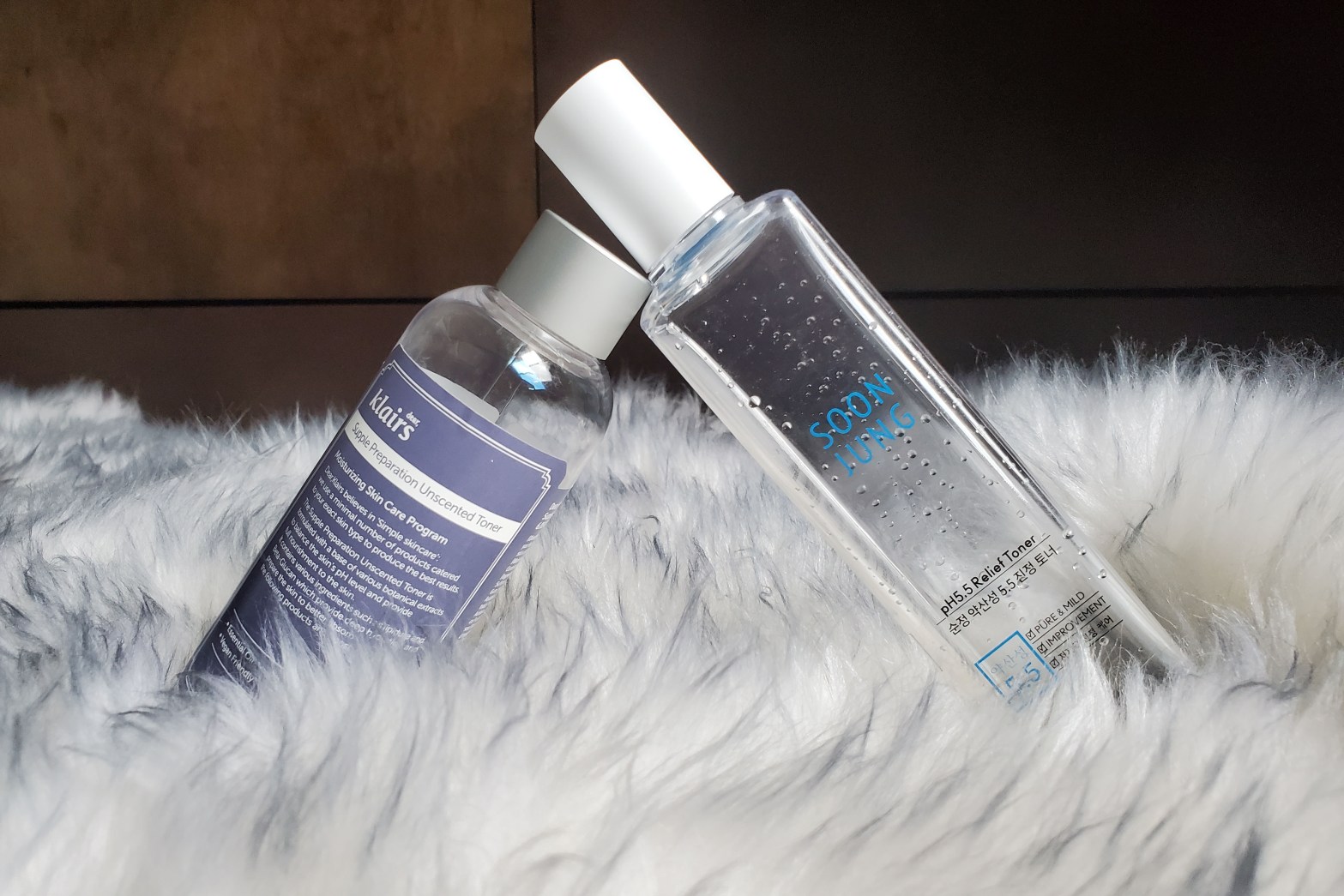
Etude House SoonJung pH 5.5 Relief Toner

This is a great toner for sensitive skin — really skin smoothing and hydrating. In terms of texture, it’s lighter than Dear Klairs (which I compared it to in my recent Face Off post) but heavier than my holy grail Cosrx Cica Toner. The packaging and feel of this are both very elegant. I definitely enjoyed using it and will almost certainly repurchase, even though it wasn’t as deeply hydrating as I prefer.
Rating: 9/10
Price: $20 USD / 200 mL

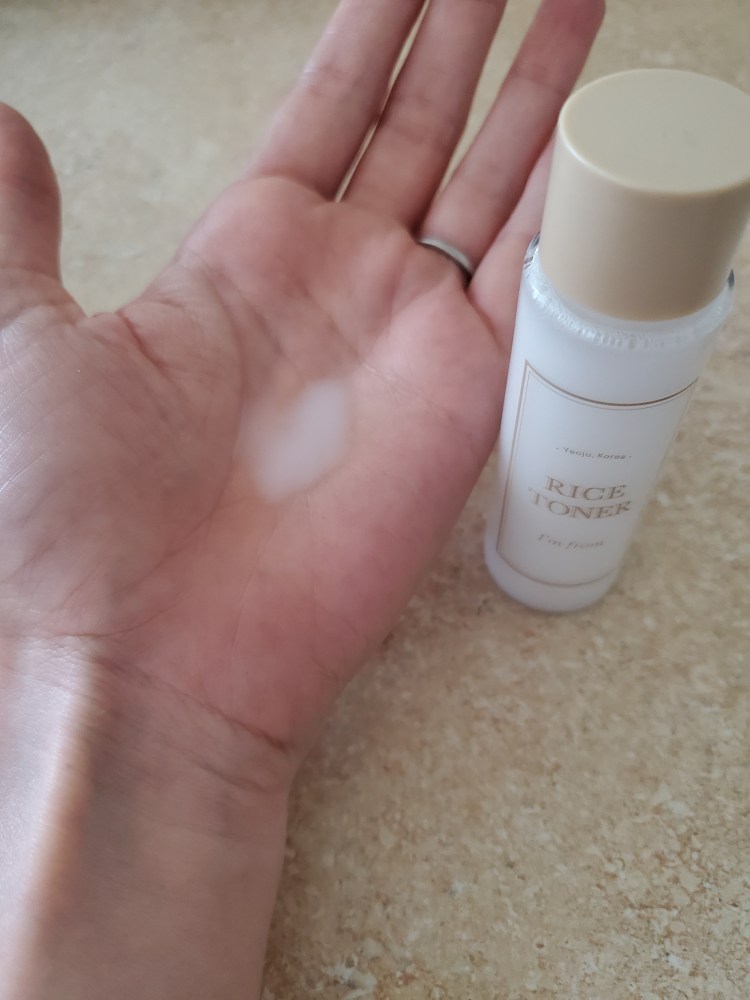
I’m From Rice Toner

I picked the mini size of this up on a whim due to its cult appeal, and I’m sold. I discussed it at length in my Face Off post between it and Laneige in May. The hero ingredients on this are rice extract, niacinamide and rice bran extract, as well as a whole bunch of other plant extracts. It’s milky but lightweight — great for layering. I didn’t use it long enough to truly see any brightening benefits, but I plan on purchasing the full size.
Rating: 9/10
Price: $28 USD / 150 mL for the full-size; shown in the $8 USD / 30 mL mini

Pyunkang Yul Mist Toner

I’m officially sold on mists. Not for using them throughout the day, but for using them throughout my routine to easily keep my skin damp. This toner is mostly coptis japonica root extract, plus the humectants glycerin and sodium hyaluronate. Coptis japonica root extract is a soothing antioxidant, so there’s no harm in multiple applications per routine, despite this toner being marketed more towards oily skin — I suspect that’s because oilier skin types tend to be able to use mists during the day without their skin drying out. For my part, I found the diffuser to be simple but release a really refreshing blast of toner. I’m not sure if I’ll repurchase, but there’s a good chance I’ll refill the container.
Rating: 8/10
Price: $19 USD / 200 mL

Pyunkang Yul Essence Toner

This was basically the first “essence toner” to really get popular, and put Pyunkang Yul on the map in the western market in a lot of ways. As the first of its type, a lot of folks didn’t really know how to use it — was it an essence? Was it a toner? Did parsing that difference really matter? The answers are yes, yes and maybe. This is an essence in that its very focused on a single ingredient (astragalus membranaceus root extract, aka milk vecht root extract), which is the focus of many of Pyunkang Yul’s products that are geared towards dry skin. It’s also a toner in that you can feel comfortable putting on several layers and apply directly after cleansing. That said, this definitely has a nearly jelly texture, so if you’re really into seven skins you probably won’t want to use this for all seven. I really enjoyed the texture of this, and have actually already picked up the full version.
Rating: 10/10
Price: $19 USD / 200 mL for the full-size; shown in the $4 USD / 30 mL mini

Cosrx Propolis Light Ampoule

I love a propolis serum (or ampoule — it’s really six of one, half dozen of the other). I picked this up when it was half off at Ulta since I’m a sucker for Cosrx and propolis, and since it came recommended by a friend. This has a bit of a gel or syrupy texture as well, surprisingly similar to the PKY Essence Toner. I did find that when I was using this in tandem with a light daily exfoliation I got basically no spots (I do tend to get hormonal blemishes). I would give this full points but I feel like I went through it pretty quickly given the texture — I needed a whole dropper to get good coverage.
Rating: 9/10
Price: $28 USD / 30 mL

Primera Alpine Berry Water Cream

As someone with normal-dry skin, I don’t usually go for water creams because I think of them as being for oilier skin. But since I had a trial size of this, I decided to give it a try as a day cream. If this is the texture of water creams, well, I am sold on water creams. The texture of this felt super bougie and luxe. I found the fragrance a bit off-putting, though, as it doesn’t fade down as fast as I’d like and is oddly floral. Disappointingly, the ingredients they tout as hero ingredients (fruit extracts and mugwort) are pretty low on the inci list (near the fragrance, actually). I don’t think I’d repurchase but I’m definitely interested in trying more water creams now.
Rating: 7/10
Price: $40 USD / 50 mL, shown here in a trial size

Krave Beauty The Beet Shield

I’m apt to list this every month up until my backstock ends, since that’s how fast I go through it. I’m still sad it’s been discontinued, and really hope they release a reformulation soon.
Rating: 10/10
Price: N/A, discontinued

Bonus Round: Single-Use Skincare

Pixi DetoxifEYE Caffeine & Cucumber Depuffing Eye Patches

At first I was not sold on these eye patches because, frankly, I just couldn’t figure out when to use them. If I used them mid-routine the rest of my face dried out, and if I used them after my routine, it seemed pretty pointless. Then I moved them to my desk. My eyes get tired during the workday, so when I would hit 3pm but still have a few hours of work ahead of me, I would pop these on for 20 minutes. Once taking them off, I literally felt less tired because my eye area felt less strained. I wouldn’t recommend these for anything other than that particular use, honestly, because the serum does seem to pill rather badly, but I’m sold on eye patches at my desk.
Rating: 9/10
Price: $24 USD / 60 eye patches

Cosrx Acne Pimple Master Patches

I’m a recent convert to pimple patches, but I’m a big believer in them. I don’t get many spots but I can’t not pick at them to save my life, and I get post-inflammatory erythema that sticks around for months literally every time. I love the sizes on this so I can use them on spots of any type, and there are enough of them that I feel able to put them on early and keep them on even after the white head comes out, which seems to help reduce the PIE. I recently stocked up on these so I have a year’s supply.
Rating: 10/10
Price: $6 USD / 24 patches

Face Off: Dear Klairs Supple Preparation Unscented Toner vs Etude House SoonJung pH 5.5 Relief Toner

So you want a hydrating toner. Maybe you’ve been hearing that you need to tone but the astringent or exfoliating toners on the market don’t work with your skin. Or maybe you’ve fallen down the k-beauty rabbit hole and are interested in trying the seven skins method. Either way, if you’ve been on the skincare internet for a while, you’ve probably heard of these two. So, which should you use?

But First — Do You Need A Toner?

Short story shorter, you don’t need a toner.

Historically they were used to restore the skin’s pH to it’s natural acidity (around 5.5) when cleansers were more basic/alkaline. Modern cleansers tend to respect the skin’s acid mantle, so this is less necessary.

That said, those who deal with dehydration in their skin, or who are trying to plump their skin, can definitely benefit from a few layers of hydrating toner. Layering a hydrating toner is frequently referred to as seven skins, which specifically refers to layering it seven times. If you’re interested for more information on hydrating toners and how to use them, check out my incomplete introduction to hydrating toners. On that note, on to the comparison!

Dear Klairs Supple Preparation Unscented Toner

Dear Klairs seems to be one of the first k-beauty brands that folks in Western markets get into, and it’s for good reason. The Supple Preparation Toner is quite popular, and so popular that they also launched this unscented version free of essential oils — when purchasing, be sure to check which one you’re getting! (It is worth noting that unscented does not mean without scent, though — some find the slightly clinical smell of this toner off-putting.)

The Dear Klairs Supple Preparation Toner is a hydrating toner in that that is its primary purpose, but there’s more to this than just hydration, which it has in spades thanks to sodium hyaluronate, beta glucan and aloe extract. Like basically any good k-beauty toner, it includes soothing ingredient like centella asiatica extract, betaine and panthenol.

This toner is unusual in that it also boasts a surprising number of antioxidant ingredients, as well as ingredients that can help address oxidative stress: licorice root extract, luffa cylindrica extract, purslane extract, tocopheryl acetate (a form of vitamin e), sodium ascorbyl phosphate (a vitamin c derivative), arginine, proline. and copper tripeptide-1.

Texture-wise, this toner has a surprising amount of body to it. The surface tension on it when you tap it into your palm is honestly quite impressive. It also means that it’s potentially less viable as a candidate for seven skins if you don’t enjoy the feeling of a film building up — personally I found three layers of this to be all that I wanted to use.

Water, Butylene Glycol, Dimethyl Sulfone, Betaine, Caprylic/Capric Triglyceride, Natto Gum, Sodium Hyaluronate, Disodium EDTA, Centella Asiatica Extract, Glycyrrhiza Glabra (Licorice) Root Extract, Polyquaternium-51, Chlorphenesin, Tocopheryl Acetate, Carbomer, Panthenol, Arginine, Luffa Cylindrica Fruit/Leaf/Stem Extract, Beta-Glucan, Althaea Rosea Flower Extract, Aloe Barbadensis Leaf Extract, Hydroxyethylcellulose, Portulaca, Oleracea Extract, Lysine HCL, Proline, Sodium Ascorbyl Phosphate, Acetyl Methionine, Theanine, Copper Tripeptide-1

Ingredients for the Dear Klair supple preparation toner

Etude House SoonJung pH 5.5 Relief Toner

The Etude House SoonJung line is designed for sensitive skin, and this is quite possibly the most stripped-down and non-irritating toner out there. In a world where many of us are looking for more and more interesting ingredients in our skincare to just pack that extra punch, SoonJung is here to say that sometimes simple is better, and more isn’t more.

Like the Dear Klairs toner, the SoonJung pH 5.5 Relief Toner focuses on hydration. It’s notable in that it avoids hyaluronic acids in any of its forms — an ingredient which has become almost as common as water itself in skincare, but which can backfire on some sensitive skin, and on those in arid climates like yours truly. Instead SoonJung relies on the oldie-but-goodie glycerin for its humectant properties, as well as propanediol.

Because its emphasis is on relief, all of the other ingredient are there to calm and sooth the skin: betaine and panthenol, like Dear Klairs; madecassoside, a form of centella asiatica; green tea extract, known to be anti-inflammatory; and scutellaria baicalensis root extract.

This toner is definitely more watery than Dear, Klairs, and you may not feel like you have anything on in the first few layers. By the fifth layer, however, the skin really feels softer and more soothed, even when severely dehydrated.

Water, Propanediol, Glycerin, Betaine, Panthenol, Madecassoside, Camellia Sinensis Leaf Extract, Scutellaria Baicalensis Root Extract, 1,2-hexanediol, Butylene Glycol, Ethylhexylglycerin, Carbomer, Polyglycerin-3, Disodium Edta

Ingredients for the Etude House SoonJung pH 5.5 Relief Toner

The Face Off: When To Use Which

Alright cool, so we know ingredients, but we know that skincare is about a whole lot more than that. So which should you use for your skins?

What you’ll get from either: a boat load of hydration. Truly, k-beauty toners are there for the hydration and everything else is everything else. But if your skin’s been feeling a bit tight, looking a bit dull, or seeming a bit plagued by fine lines, you truly can’t go wrong here.

What you’ll get from Dear Klairs Supple Preparation: hydration without all the layers, as well as some passive brightening benefits.

What you’ll get from Etude House SoonJung: some serious soothing and skin softening.

So, which one you should pick? As with all skincare, it depends on your skin, your goals and your budget. If you want to try a hydrating toner but don’t have the patience or the coin to use that much but want to feel the hydrating benefits, Dear Klairs Supple Preparation Unscented Toner is a great option. If your skin just feels like it can never get enough water and your skin barrier’s constantly suffering for it, Etude House SoonJung pH 5.5 Relief Toner is definitely the one for you. Either way, happy toning!

Honorable Mentions

Due to popular demand, I wanted to also add some toners and essences I very much enjoy but didn’t merit being part of this face-off because they’re not similar enough:

Cosrx Cica Toner, with seven forms of cica, which is even more watery than the SoonJung toner and which I love to pieces for both its soothing properties and its feeling of deeply penetrating hydration.

Pyunkang Yul Essence Toner, which I definitely deem more essence than toner, for its slippery and syrupy consistency. Not great for layering, but great as the last step of your toning steps.

Cosrx Propolis Toner, which is more moisturizing and brightening than hydrating per se, but is a huge help for dry skin that can still struggle with the occasional breakout.

May Openeds Reviews

It’s hard to get a good feel for a product within the first weeks, but I always try to anyway. After all, some products are nearly instant hits, and others not so much. This month? Definitely already some hits, definitely some “well it’s usable”. As always, products are listed in the order opened (though photographed in roughly the order they should be used in a routine).

Biossance Squalane + Marine Algae Eye Cream

I have to admit, I can’t get excited for eye creams. I had this on hand from a Biossance order last year, and it took me so long to go through the last eye cream that I also got in that order that I’m only just now opening it. This is one that would probably be great under makeup, if you wear it. For my part, I like applying it all over my eye area and lips before applying retinol in the evening. This lets me still apply the retinol liberally, while not worrying about sensitizing areas.
Price: $54 USD / 15 mL for the full size; shown in a sample size

Rohto Mentholatum Water Lip Color Balm SPF 20 PA++

It’s nearly summer, so I’m out and about more and wearing more suncreen. That means I also needed more spf lip balm! Other ones I’ve tried have either tasted awful (Aquaphor) or left a white cast (Vanicream), so I wanted to try something else. This one leaves no cast and has no taste, all while coming in a nice little chapstick tube. I’ve already purchased another one, lest I lose this one!
Price: $6 USD / 4.5 g

Neogen Real Ferment Micro Essence

I’ve really become a believer in first essences, and since this one is sometimes considered a dupe for the Missha First Treatment Essence, which I love, I was eager to try it. This one also has bifida ferment lysate and saccharomyces ferment filtrate, as well as niacinamide and adenosine. Otherwise it generally has a significantly longer ingredient list. My redness has reduced again by virtue of using so many fermented ingredients, but so far it doesn’t feel as hydrating as the Missha.
Price: $38 USD / 150 mL

Beekman 1802 Milk Drops Probiotic Ceramide Serum

I picked this up when it was half off at Ulta, because I basically can’t not have a ceramide serum in my routine. This one looked particularly fun, since in addition to ceramides and niacinamide it also has some natural AHAs and BHAs, a bunch of plant extracts and, of course, goat milk and probiotics. Texture-wise, it’s a bit more liquidy and spreadable than a more typical ceramide serum, but is usable AM and PM. The bottle is super cute and looks almost like a small baby bottle, but volumetrically this definitely seems to be half glass, which is an unfortunate use of packaging.
Price: $45 USD / 30 mL

Good Skin Days C’s The Day Serum

This is my third bottle, and I’m still loving it! Vitamin c, niacinamide, licorice root, ginseng and mushroom for the win!
Price: $26 USD / 30 mL

Indeed Labs Retinol Reface Serum

I’m always interested in trying gentle retinols, so when I learned about this one and how it might be akin to the Versed Press Restart which I love so much. This has encapsulated retinol, bakuchiol, and matrixyl. So far it seems to be similarly gentle, though a slightly thicker texture. My one irritation with it is not facial irritation so much as packaging irritation — it’s a pump and stores head-down, but after the first two pumps it’s a struggle to get more out each time (I use three for face, neck and chest).
Price: $20 USD / 30 mL

OMI Verdio UV Moisture Essence

Since Krave Beauty Beet Shield has been discontinued, I’m on the hunt for my family’s next holy grail, and hoping to find a dupe for it. I may have lucked out on my first attempt. This uses the same UVA filters as Beet Shield (though not the same UVB, it appears), as well as a variety of plant extracts (though no beet extract). The texture and color are even similar. And I actually prefer the packaging in this, as it’s much easier to dispense. That said, this seems to simultaneously feel greasier and go on less dewy, and it doesn’t seem to have the same redness reduction but hey, I can deal with that. The husband likes it, too! I’ve already repurchased another tube.
Price: $9 USD / 50 g

I’m From Rice Toner

I wrote about the I’m From Rice Toner in my recent Face Off post, comparing & contrasting it with Laneige Cream Skin Refiner, so I won’t go too into detail here beyond to say that I only opened it about two weeks ago and I’m already halfway through it, so very much enjoying! I’ll almost certainly repurchase the full-size at some point.
Price: $28 USD / 150 mL; shown in the $8 USD / 30 mL size

Derma E Advanced Peptides And Collagen Moisturizer

This moisturizer technically came to me already opened, but this month was my first time using it. I had originally purchased it for my mom, because she was interested in a cheaper peptide moisturizer than the one she had been using, and because I didn’t hate the inci list. That said, she didn’t like it (she’s hard to please with skincare). To be fair, I’m not loving it either. It leaves my skin feeling very smooth but also weirdly tight for how heavy of a cream it is. I find that unless I put a sleeping mask or facial oil on after (I use it in the PM), I don’t like it very much. But hey, it’s open, and the inci list nearly looks like k-beauty: matrixyl & argireline for the peptides, plus ascorbyl palmitate (derivative of vitamin c), retinyl palmitate (vitamin A) and tocopheroyl acetate (vitamin E), panthenol (vitamin B5), pinus pilaster bark extract (aka pycnogenol, an anti-oxidant), plus some nice oils. It does smell strongly of lavender, but it fades quickly.
Price: $21 USD / 60 mL

May Empties Review

It’s nearly summer! And I’m finishing up another batch of products just in time. Some of these will be familiar to frequent readers, as there are three recurring favorites in here, but there are also some new favorites to be found — I think this is the most 10/10 I’ve done in a batch of empties.

Then I Met You The Giving Essence

This essence is a really light liquid, pink liquid, and both it and the bottle are incredibly aesthetically pleasing. The color comes from black chokeberry fruit extract, but that’s arguably not the hero ingredient of this. Indeed, this essence is chockful of fermented filtrates — galactomyces, aspergillus and saccharomyces — so between those and the texture it works well as a first essence, which is how I used it. Unfortunately, however, it didn’t seem to pack the punch for my skin like more traditional first essences do. For example, I noticed that a lot of my redness on my chin came back while using, which Missha had seemed to banish. In general, I don’t know that this added much beyond feeling fancy.
Price: $50 USD / 100 mL
Rating: 7/10

RNW Der. Ceramide Concentrate Serum

I swear by ceramide serums, and this one has a particularly lovely ingredient list: five types of ceramides, niacinamide, a variety of antioxidant plant extracts, a bunch of peptides, and a few other nice-to-haves like squalane. It’s got what I’m now considering to be a classic ceramide serum, meaning a bit gluey and goopy. For my part, I enjoy using ceramide serums AM and PM mixed into another serum, and this one was no exception. It and I’m From Ginseng became best buddies for a while there. I really enjoyed this, and really appreciated its support for my skin barrier while using. If you’re using a pricey ceramide serum (*cough* Kate Somerville *cough*) try this one instead!
Price: $32 USD / 30 mL
Rating: 10/10

Good Skin Days C’s The Day Serum

This is my holy grail vitamin c serum — this was my second bottle, and I had another in reserve to open up. This has 10% ascorbic acid, which is enough to be effective but not enough to be irritating. It’s got licorice root and niacinamide to amplify the brightening benefits, and mushroom and ginseng to amplify the anti-aging ones. I find it to be super gentle, and put it on first thing in the AM after toning. It does oxidize, so definitely use it up within 4 months after opening (as it says on the bottle) but I tend to empty it just as it starts to go particularly orangey. My skin tone has definitely improved since I began using it in December.
Price: $26 USD / 30 mL
Rating: 10/10

I’m From Ginseng Serum

As a human of a certain age, I’m starting to look for passive well-aging benefits in my skincare (as opposed to active ones like vitamin c and retinol, which I’m already incorporating elsewhere). So ginseng, of course, sprang to mind. This lovely hydrating serum has two different ginseng ingredients (red ginseng extract and panax ginseng seed oil) as well as other yummy antioxidants (hello licorice root, my old friend). Honestly in the two months I’ve been using this — both AM and PM — I haven’t noticed any differences, but well-aging is playing the long game, so I’d be down to give it another go. Worth noting that this does have some fragrance to it but it’s a yummy cinnamony sort of scent, so I didn’t mind it.
Price: $29 USD / 30 mL
Rating: 8/10

Chiasm Skin Daybreak Prototype A

This orangey daytime facial oil really helped ferry my skin from winter to near-summer. I mixed a couple drops in with my moisturizer, and it kept things from drying out throughout the day. I did find it to be a tad smelly when it went on, but that’s being addressed once it comes out of prototype mode, as I referenced in my “opened” review for it. My main beef? I do suspect that it’s stained some of my clothes, particularly the collar of my robe. (Yes, sometimes I do my skincare and stay in my bathrobe. Come at me.)
Price: TBD
Rating: 8/10

Versed Press Restart Retinol

This is my holy grail retinol. This is my second bottle of it, and both times I found that I could use it daily, even on exfoliation days. This has a very low (.03) percentage of encapsulated retinol, as well as bakuchiol, but it’s enough to be effective. In particular, I’ve noticed that improves the redness around my nose where I had previously thinned my skin from overuse of cortisone on seborrheic dermatitis. I find it takes me about four pumps to cover face, neck and chest, but I also give it credit for keeping me from pronounced tech neck, and love that it’s gentle enough for me to use there.
Price: $22 USD / 30 mL
Rating: 10/10

Rhonda Allison Cherry Jubilee Enzyme

I got this as a Christmas gift from a friend (along with the antioxidant mask below) and I’ve finally opened it up. This is a very cherry exfoliating mask. The first ingredient is sweet cherry seed oil, which it smells and tastes of. (No, I don’t lick my skincare. But also I can’t rinse off wash-off masks easily to save my life.) It’s also got glycolic, lactic, malic, salicylic and mandelic acids. It didn’t tingle, thankfully. It was fun to use in tandem with the mask, but I wouldn’t repurchase.
Price: $15 USD / 15 mL
Price: 5/10

Rhonda Allison Chocolate Antioxidant Mask

This mask looks and feels like melted Hershey’s chocolate. It does have cacao extract, so it can lay claim to the name, but mostly there are a variety of oils in here doing the heavy lifting, as well as some obligatory other plant extracts and essential oils. In the product description sheet, they claim this may have a “stimulating” effect, but I just found that it left me surprisingly red. (Granted, this may have been in large part due to pairing it with the enzyme mask, like they recommend.) Definitely a fun visual, but there are moisturizing wash-off masks I enjoy more.
Price: $15 USD / 15 mL
Price: 5/10

Krave Beauty Beet Shield

Another holy grail, and I’m devastated that it’s been discontinued, and really really hope that they reformulate and re-release it. Luckily I stocked up last Black Friday, so I have enough to last me and my husband through the summer. Unlike many others, I’ll continue using this until we use up our stock, as I’ve seen it work for me even at high elevations on very sunny days.
Price: N/A
Rating: 10/10

Laneige Cream Skin Toner & Moisturizer

I’ve recently written about Laneige Cream Skin in my Face Off post, so I’ll spare some of the details about it here, but suffice it to say this is a great addition to your skincare if you’re hoping to give your skin a bit of an extra hug. I really enjoyed it during the winter and definitely anticipate buying for next winter.
Price: $33 USD / 150 mL
Rating: 10/10

Cosrx Full Fit Propolis Light Cream

Yes, I just opened this in April. Yes, I’ve already emptied it. I’ve been using it both AM and PM as the weather transitioned and let me just say, it’s a delight. Light enough for use under sunscreen, but great for nights in the 40s and 50s (Fahrenheit) under facial oil and/or a sleeping mask. Between this, the accompanying ampoule and, admittedly, a little help from the Glow Recipe toner, it’s now been a month and a half since my last spot. Propolis for the win! Definitely recommend.
Price: $32 USD / 50 mL
Rating: 10/10

Bonus Round: Body Skincare

Detox Seaweed Bath

If you’re new here, you’ll soon find out that I’m obsessed with baths, so I’m obsessed with bath products. I mostly just look for things to make the bath less drying, but this ain’t that. What it is, however, is bladderwrack seaweed. Brown algae, of which bladderwrack is the most common type, is an emollient, antioxidant and skin brightener. It’s also a source of iodine, which given my recent hair loss I figure couldn’t hurt. This comes with a sachet to put a good portion of the seaweed in, and after use you can compost it. I didn’t notice any particular benefits after my four baths with it, but given the price I’m down for trying it out some more.
Price: $10 USD / 70 g
Rating: 9/10

Face Off: Laneige Cream Skin Refiner vs I’m From Rice Toner

So you want a milky toner. The Laneige Cream Skin Refiner (known as Cream Skin Toner & Moisturizer in the US market) and the I’m From Rice Toner both get a lot of hype, and are basically the market leaders in this category, but how similar are they? Well, let’s get overly pedantic and discuss.

Laneige Cream Skin

Cream Skin is labeled as both a toner and moisturizer due to its relatively high oil content (for a toner, anyway), which gives it good body.

The brand considers the hero ingredient of this product to be camellia sinensis leaf extract. This is generally referred to as green tea extract, but in this case it’s actually white tea extract. Why does that matter? White tea is less processed, which ostensibly means it retains more of its antioxidant goodness.

Another hero ingredient, though less often touted, is the limnanthes alba seed oil, or meadowfoam seed oil. This plant oil is one of my personal favorites, though I’ve never seen it marketed as a stand-alone facial oil. Meadowfoam is very emollient, rather than occlusive, which makes it work in products at any part of your skincare routine. Like jojoba, its fatty acids are quite similar to those in sebum, so it moisturizes without feeling greasy.

One serving size of Laneige Cream Skin

I’m From Rice

I’m From doesn’t leave you guessing on the hero ingredient of this toner — it’s rice, and in no small quantity. The first ingredient of this is rice extract, which it has at over 75%, and there’s rice bran extract farther down the list as well.

The internet doesn’t seem to have particularly good documentation on the differences between the two for your skin, but think of it functionally as the difference between white and brown rice, which it is — brown rice has the bran and is more nutritious. Regardless, between the two you get a lot of amino acids, ferulic acid, vitamin E, a whole host of B vitamins and other minerals. Not stopping there, this toner also includes some extra niacinamide, as well as purslane extract (a source of vitamin a and c), elm bark extract (a skin soother) and amaranthus caudatus seed extract (another antioxidant, and peptide source).

Across its ingredient are a whole host of brighteners, which is why this toner is considered a great option for slowly fighting back post-inflammatory marks, as well as sun damage. It’s also a skin soothing toner, and makes a light film on the skin to protect it.

One serving of I’m From Rice Toner

The Face Off: When To Use Which

Alright cool, so we know inci lists. But we also know that skincare is a whole lot more than an inci list. So when should you slather which on your face?

What you’ll get from either: hydration, skin soothing, and skin softening. Being toners, these definitely give a good dose of hydration to the skin. They’ll also comfort irritated skin (though not as much a centella asiatica or aloe might).

What you’ll get from Laneige Cream Skin: a nice hug to your face to protect an irritated or compromised skin barrier. This one was great during the Colorado winter, especially during the loooong routines that I tended to do — I used it both during my toner step, and then again right after serums but before my retinol. The body of this, which you can faintly tell from the picture, makes it so you can’t do seven skins with it, but you can slap it on wherever you need it in your routine.

What you’ll get from I’m From Rice: subtle brightening benefits and increased layerability. This is significantly more watery, so you can layer it up as much as you want to increase hydration and plumpness. You’re not apt to see any dramatic reduction in pigmentation and sun damage, but this will reduce dullness and generally improve your complexion over time.

So, which one you should pick? It really depends on your skin concerns. For my part, I’m glad I’m transitioning from Laneige to I’m From when I am — I no longer need that extra moisturization, but I AM starting to get a lot more sun exposure, so extra help fighting pigmentation is always welcome.