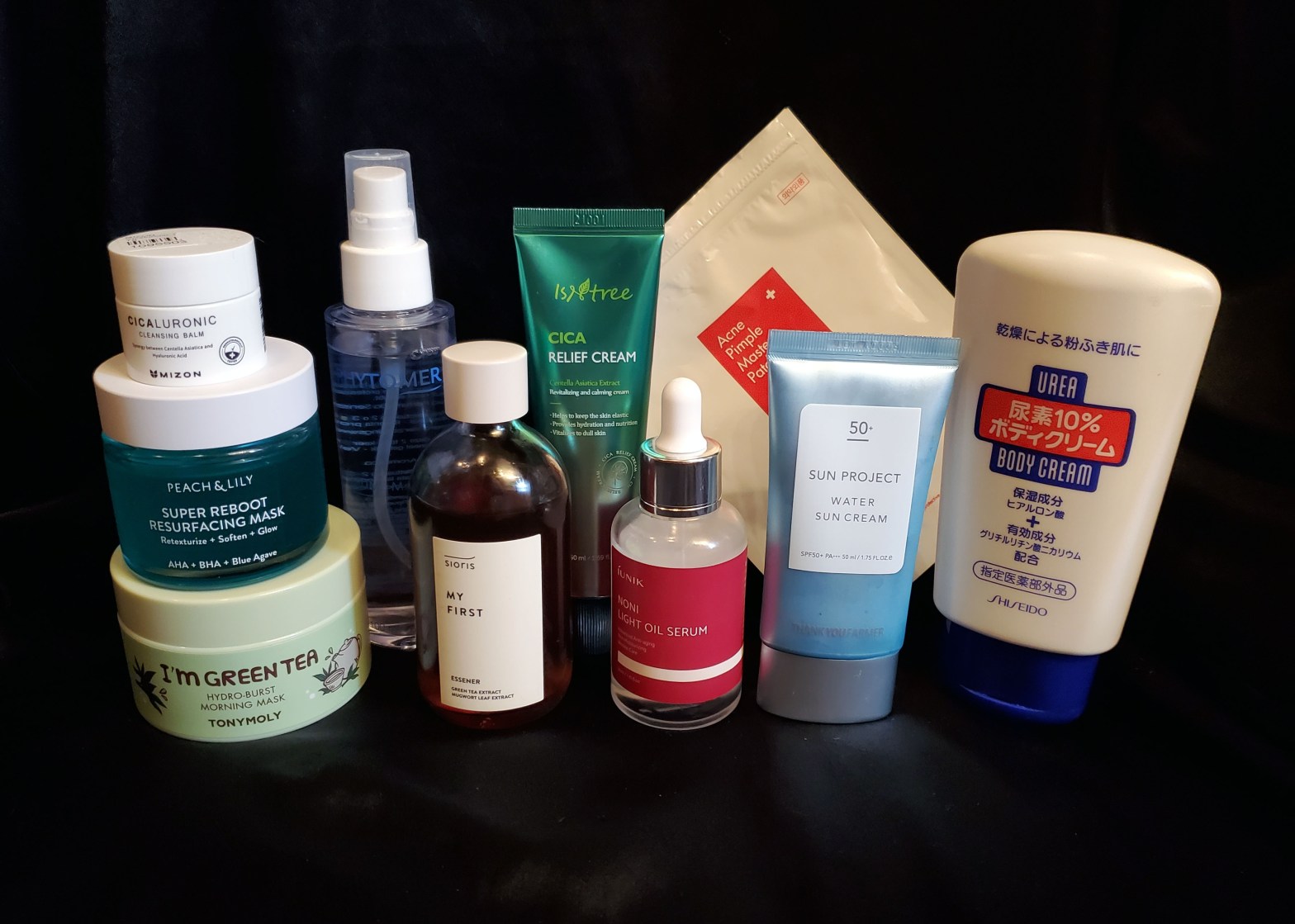
March Openeds Review

Spring! It has finally sprung, and everything feels light and new. Work has been going well, my marriage has been doing well, the Skincare Fanatics Facebook group has been doing well, my skin has been doing well, and we added a new puppy to our family (check out my last post for a Kirsten cameo) who is, well, doing well but smart enough to be a real nuisance (I think she gets it from her parents). I live in Colorado, so we’re not free from the vagaries of winter just yet — it seems like there’s almost always a May Day snowstorm — but I’m confident that I’ve got the skincare in my bin to manage it. Reminder: I only rate skincare I’ve emptied, so you’ll have to wait for a month or two or three to get my final verdict on these.

Cleansing Products

🌻 Then I Met You Living Cleansing Balm

Then I Met You, a brand from Soko Glam, is incredibly aesthetically on point, and so I really wanted to try their beautifully yellow Living Cleaning Balm. The color, of course, comes from the virally yellow sea buckthorn oil, but the main oils in this cleansing balm are olive and grape seed. I find that this doesn’t melt down as fast as other cleansing balms I’ve tried, so a little does NOT go a long way — if I’m diligent with my double cleanse, this will be empty in April.
Price: $38 USD / 90 g; shown in the $6 USD / 10 g travel size

🍚 Tatcha The Rice Wash

Aesthetic cleansing is apparently my thing this month, because I finally opened my tube of Tatcha The Rice Wash, which has been in my stash for … over a year. I had this sinking suspicion that I’d love it and that would be frustrating because, well, Tatcha prices. I’m ashamed to say that it appears I know myself. I do really enjoy cream cleansers, as it turns out. This has little microcrystalline wax beads that melt down, in addition, making this a super fun cleansing experience that I find myself — gasp! — looking forward to.
Price: $36 USD / 120 mL; shown in the $16 USD / 50 mL travel size

Toners & Essences

🌊 Round Lab 1025 Dokdo Toner

Round Lab is a less popular k-beauty brand (probably because it’s harder to find in the US), but their 1025 Dokdo Toner is one of their most popular products so of course I had to try it. This is a very watery, hydrating toner with a very pared down ingredients list: highlights are sea water, panthenol, allantoin, algae and sugarcane extracts, and finally HATCHING EX-07 — an enzyme exfoliant. Despite that enzyme, this is a toner that layers nicely with no irritation.
Price: $17 USD / 200 mL

🐌 Benton Snail Bee High Content Essence

Benton’s Snail Bee Ultimate Serum was my first introduction to snail (and bee, for that matter), so when I won a giveaway from Nudie Glow US last summer and receiving their High Content Essence was an option, it was a no-brainer for me. Benton uses cruelty-free snail mucin and bee venom to hydrate and plump the skin, with such a lightweight texture. This is quite serum-like (I’ve actually been cocktailing it with the Purito Centella Unscented Serum, which I don’t love the texture of but, hilariously, uses the exact same packaging) and hydrating.
Price: $20 USD / 60 mL

Serums

🍢 numbuzin No. 3 Skin Softening Serum

As I get more into skincare, I’m trying to get more into esoteric k-beauty, and following less-known k-beauty YouTubers: two of which (Soo Beauty and Tina Tanaka Harris) got me onto numbuzin, and specifically the No. 3 Skin Softening Serum. This “bodlebodle repair” serum (if you know what that means, please tell me because I think it’s fun to say) has a beautiful formula. It’s super watery, with 42% bifida ferment lysate and 21% of my ingredient bestie galactomyces ferment filtrate, along with fun things like silk and goat milk extract, and a bunch of other skin barrier goodies.
Price: $21 USD / 50 mL

🍑 Mary & May  Idebenone + Blackberry Complex Serum

Mary & May is a new k-beauty brand, and their Idebenone + Blackberry Complex Serum seems to be taking parts of the skincare internet by storm — perhaps because they are pushing it to influencers. (Full disclosure: I received this product for free through the Yesstyle Influencer program in exchange for a full review on IG. This, obviously, is not that.) I think part of the interest in this product stems from folks wanting antioxidant serums other than the classic vitamin c, and this has a variety of fruit extracts (blackberry, acai and blueberry adding up to 20%) and .1% of idebenone, a synthetic antioxidant similar to CoQ10. Fun fact: Kirstin, the new pup, has stolen this out of my skincare bin TWICE but somehow it has escaped relatively unscathed.
Price: $18 USD / 30 mL

πŸ’ Good Skin Days C’s the Day Serum

You knew what was coming — despite being out of stock on Soko Glam for a while now, I had backups of the Good Skin Days C’s the Day Serum in my fridge’s cheese drawer. In a fit of needing to squeeze in some more gruyere, I had no choice but to open a new bottle. I do think it started out a bit more yellow than other bottles, so the air in the packaging was enough to oxidize it ever so slightly, but it’s the same watery, non-tacky, gentle texture I’ve loved for over a year now.
Price: $26 USD / 30 mL

Creams

β˜•οΈ The INKEY List Caffeine Eye Cream

I feel like The INKEY List Caffeine Eye Cream was hugely popular in 2020, and then fell off the map for a bit. Well, I’m finally trying it. Caffeine feels like it might be a gimmick — “ooh it wakes you up so it’ll wake up your eyes” — but it turns out there is actually evidence that caffeine can function topically as a vasoconstrictor, which is why it can help puffy eyes. This is definitely a hydrating eye cream, rather than being emollient or occlusive, and doesn’t sting my eyes at all.
Price: $10 USD / 15 mL

🩹 First Aid Beauty Ultra Repair Cream

I’m not sure how I got this far into my skincare obsession without trying First Aid Beauty, but here we are — I’m finally trying their Ultra Repair Cream. I expected this to be much thicker, but it’s actually a nice medium-weight cream, with a reasonable bit of hydration and emollience to it but basically no occlusion. Being FAB, of course, this includes collloidal oatmeal, but it also has a nice mix of fatty acids and alcohols, shea butter, ceramide NP and green tea and licorice extracts. I do find that this needs a fair bit of blending in order to not be streaky and white.
Price: $38 USD / 6 oz; shown in a 1 oz travel size

πŸ› Purito Dermide Cica Barrier Sleeping Pack

I love sleeping masks/packs and I love cica, so the Purito Dermide Cica Barrier Sleeping Pack seemed like an obvious choice to help my skin through the transition to spring. I’ve heard of some folks using this like a moisturizer, which I could see — it’s really nourishing with a lightweight, almost gel cream-like texture — though I use it after an emulsion and a moisturizer, at least for the time being. Centella asiatica extracts and compounds are really the ingredient heroes here, but it also includes squalane, jojoba and sunflower oils, so it’s apt to play nicely for most skin types in some capacity.
Price: $19 USD / 80 mL

πŸ₯› BANOBAGI Milk Thistle Repair Sunscreen Plus

I’ve been curious about BANOBAGI’s milk thistle line for a while, and picked up the Milk Thistle Repair Sunscreen Plus when it was BOGO for Black Friday. This is a SPF 45+ PA++++, so fairly good protection, and has a lightweight texture. I do find myself missing the Thank You Farmer Sun Project Water Sun Cream, though (I handed it off to my husband when he emptied the OMI Verdio UV Moisture Gel) — the Milk Thistle Repair Sunscreen is almost too liquidy, and lacks emollience. I think it may be destined for a body sunscreen, just because life’s too short not to put sunscreen you love on your face.
Price: $20 USD / 50 mL

March Empties Reviews

March was a big month for me, and not just because I wound up with 15 empties. Work has been nuts, and we just got a new puppy (who, of course, puppy bombed the photo for this post). My skin’s also noticing that winter’s about to end and spring is starting, so what I’m looking for now in my skin has shifted — but we’ll get into that more next week. I’ve got quite a few of skincare internet’s holy grails in this month’s empties, so please keep in mind that I rate all products in terms of how they performed for me and my skincare needs. My skin is generally well-behaved but dry, dehydrated skin in Colorado can be tough to deal with, especially when trying to slow signs of aging.

Cleansers

🧼 Mizon Cicaluronic Cleansing Balm

I love cleansing balms, and the Mizon Cicaluronic Cleansing Balm is an excellent exemplar. This has a bit of a waxy texture but melts to a thin oil, so it spreads nicely. It also emulsifies and rinses easily. In keeping with its name, this cleansing balm does include centella asiatica extract, as well as eight types of hyaluronic acid. Like one might expect from k-beauty, Mizon tucks iin some additional nice extracts, like aloe, turmeric, coccinia indica, seaweed, eggplant and more, as well as moringa oleifera and jojoba seed oils. Aesthetically, it’s a pretty shade of blue with a nice fragrance to it. I did enjoy using this cleansing balm, though I do think there are nicer ones at a lower price point per mL.
Opened: February
Rating: 9/10
Price: $18 USD / 80 mL; shown in a 7g sample size

πŸ₯› SkinRX Lab MadeCera Cream Mild Whipped Cleanser

I can’t get too excited about water cleansers — cleansing is just so boring — but the SkinRX Lab MadeCera Cream Mild Whipped Cleanser is almost enough to change my mind. The MadeCera line all uses a combination of madecassoside and ceramide NP, ergo the name, but this includes a bunch of other lovely ingredients, too: sea water, hydrolyzed collagen, other centella asiatica compounds and multiple extracts. It also has shea butter, squalane, olive oil and cholesterol, to offset the stripping nature of cleansing. This is a cream cleanser, so it doesn’t have the sulfate- or coconut-based surfactants commonly in foaming cleansers — the principle surfactant here is myristic acid, which can be drying for some. The formula wins out here, as it makes a lovely whipped lather without foaming or drying. The one drawback? It smells more citrusy than the fragrance in the rest of the line, which I love.
Opened: January
Rating: 10/10 <– a first for me for cleansers
Price: $15 USD / 100 mL; shown in a 20 mL sample size

Toners & Essences

πŸƒ Cosrx One Step Green Hero Calming Pads

Toner pads have long confused me, but when I received the Cosrx Green Hero Calming Pads in a giveaway I was morally obligated to give them a go. I assume they’re considered “one Step” because there’s no need to put the toner on a cotton pad — it’s already on one. That said, I don’t put my toner on cotton pads. In that context, I couldn’t figure out how to use these at first. I tried the “mini sheet mask” approach, but then the part of my face without the toner pads felt left out. I tried it as intended as an easy way to apply toner, but that felt wasteful. But then I decided on the approach: as a lazy way to cleanse in the morning. No, toners are not part of cleansing. However, the physical interaction between the soaked pad and the skin removed a bit of the night’s grime, without the need for my customary rinse. I wouldn’t rebuy for this purpose, but I might consider doing this with reusable cotton pads and a different toner in the future.
Opened: August
Rating: 8/10
Price: $22 USD / 70 pads

πŸ–Ό elmt Advanced Calming Solution

Wishtrend’s line elmt specializes in toners, and their Advanced Calming Solution is very interesting. The entire line focuses on synergies between its two primary ingredients. In this case, it’s centella asiatica and tremella fuciformis polysaccharide. Centella asiatica is well-known for its calming and soothing benefits, and this includes a variety of its extracts at 59%. Tremella fuciformis, or snow mushroom, is growing in popularity due to its anti-oxidant and anti-irritation benefits. This also includes panthenol and allantoin to amplify the calming factor. The bottle looks small but this is a good size — though the thick glass bottom is a bit of a fake-out when trying to figure out how much you have left. This isn’t as deeply hydrating as other centella toners I love (cough Cosrx cough), but it is fabulous for soothing.
Opened: January
Rating: 10/10
Price: $20 USD / 150 mL

πŸ’§ Beauty of Joseon Ginseng Essence Water

I love the price point of Beauty of Joseon products, so I was excited to try the Ginseng Essence Water. This ha 80% ginseng root water, as well as extracts from the root, berry and callus cells and a ginseng ferment. This also includes niacinamide, allantoin, panthenol and adenosine to round the formula out. Ginseng is a great antioxidant and anti-inflammatory ingredient, and can promote circulation. I wish I liked this more than I did. It’s a bit of an essence toner thickness, so it layers up reasonably well as part of a routine. I didn’t find it to be particularly hydrating, however, and I actually felt that my generalized skin redness increased while using this product — I guess perhaps the increase in circulation worked TOO well — though those without my persistent issues will probably see good results.
Opened: November
Rating: 6/10
Price: $18 USD / 150 mL

Serums

πŸ’œ Missha Time Revolution Night Repair Probio Ampoule

The Missha Time Revolution Night Repair Probio Ampoule is regularly reformulated, but is generally accepted as a dupe for the EstΓ©e Lauder Advanced Night Repair Serum because, like that serum, the hero ingredient is bifida ferment lysate, which is an antioxidant, reparative probiotic (well, postbiotic, but semantics). This also includes a variety of other fermented ingredients, niacinamide, panthenol, cholesterol and a salad-worth of extracts: carrot, beet, cabbage, eggplant, sugarcane and algae. Despite its name, there’s no reason that this can’t be used AM and PM, so that’s what I do. The drawbacks here are twofold: there are a whole host of essential oils, and I think there are other bifida products on the k-beauty market now that are as nice or nicer at a better price point (hi, man:yo).
Opened: January
Rating: 8/10
Price: $54 USD / 50 mL; shown in a sample size

πŸ’ Good Skin Days C’s The Day Serum

I feel like I have been pushing the Good Skin Days C’s The Day Serum for so long that I should be the reason it’s currently out of stock at Soko Glam. As it is, I’m glad that every time they run sales I try to stock up, since I currently have two boxes of this in my fridge’s cheese drawer. This is a water-based 10% ascorbic acid serum, so it’s not sensitizing, not tacky but is prone to oxidizing (ergo the fridge storage when not actively in use — when in use, I tuck it inside the bags the Beekman ceramide serum came in but keep it in my skincare bin). Niacinamide, camu camu extract, licorice root extract amplify the brightening.
Opened: January
Rating: 10/10
Price: $26 USD / 30 mL

πŸ₯­ Glow Recipe Guava Vitamin C Dark Spot Serum

While I regularly use an ascorbic acid serum (hello my lovely up above), I wanted to try the Glow Recipe Guava Vitamin C Dark Spot Serum because of that “dark spot” emphasis. I don’t get many blemishes anymore, but when I do they cannot not leave a PIE spot behind. I also have a couple splotches of sun damage that I’d like to address. This serum includes five different derivatives of vitamin c — and because they’re derivatives, that means there are fewer conflicts and less chance of irritation, so I was able to use this in every routine. I was more excited, however, by the inclusion of tranexamic acid, which basically helps wrangle wayward melanocytes as they produce more melanin than they should. It took basically the whole bottle to see results, which isn’t surprising, but I do think this helped with my PIE — there’s a notable reduction of the stubborn marks around my mouth. It did not, unfortunately, do anything on my skin to address the sun damage, however, but that probably requires longer-term use.
Opened: January
Rating: 10/10
Price: $45 USD / 30 mL

πŸ₯‘ Glow Recipe Avocado Ceramide Recovery Serum

The Glow Recipe Avocado Ceramide Recovery Serum is so hyped that I, as an avid consumer of ceramide serums, could not NOT try it out eventually. Because of the price, I was afraid to like it (my preferred price point for serums is $1 / 1 mL). But I do like it. Like some of my other favorite ceramide products (RNW Der Ceramide and Stratia Liquid Gold, for example — stay tuned for a Face Off between the three), this pairs ceramides with cholesterol and fatty acids to really rebuild the skin. In keeping with its name, this also include avocado oil and extract. The green color and the inclusion of rice extracts also help eliminate redness, and niacinamide and palmitoyl tripeptide-8 help cut down irritation. The pump for this works really well, and the texture is such that a pump and a half can cover face, neck and chest.
Opened: December
Rating: 10/10
Price: $42 USD / 30 mL

🍯 I’m From Honey Serum

I dearly love the I’m From Honey Mask and know many folks who love the I’m From Honey Serum, so I was super jazzed to try it — after all, I’m a sucker for propolis serums, most of which also include honey and all of which, well, come from bees. This hero here is a trademarked complex at 30% which includes honey, black bee propolis, royal jelly, bee venom, turmeric, bee pollen, and cinnamon (note, not 30% honey). This also includes niacinamide, centella asiatica extract, madecassoside and ascorbic acid. It’s quite a thick texture, between the honey complex and dimethicone, and is certainly very moisturizing. That said, I think there are other honey and propolis serums that I prefer and saw greater improvements from.
Opened: January
Rating: 7/10
Price: $28 USD / 30 mL

Creams

🍡 Pyunkang Yul Black Tea Time Reverse Eye Cream

I think Pyunkang Yul is one of the Korean brands doing the most interesting formulations, and so while I’m not a big eye cream user, I was excited to try the Black Tea Time Reverse Eye Cream (the aesthetics also didn’t hurt — look how shiny!). This uses fermented black tea and mulberry extract for their antioxidant and brightening benefits, while hydrating with beta glucan and hyaluronic acid. It’s got a really nice light texture, with the shea butter and macadamia seed oil keeping it buttery. And in classic k-beauty fashion, there are peptides and ceramides in this as well. I enjoyed using this around my eyes and on my lips under a more occlusive balm.
Opened: September
Rating: 10/10
Price: $29 USD / 25 mL; shown in the $7 / 9 mL mini

πŸ˜‡ Farmacy Honey Halo

I have been recommended the Farmacy Honey Halo Moisturizer so much that I took the plunge for the jumbo size. I can see the hype: it smells absolutely delicious, despite having no added fragrance, and is very thick. Like, very thick. You can tell this is chock full of shea butter. Additional worthwhile call-outs are, of course, honey, as well as propolis, royal jelly, ceramides and sea buckthorn oil. This is definitely a moisturizer for dry skin, and a little goes a long way. I will say that those who suffer with dehydration will be disappointed with this — while this had great emollience and occlusion, I really did not find it to have any hydration whatsoever. Indeed, I had to amp up my toning routine with more layers while using. But if you want to splurge for a moisturizer that will have great skin benefits, without needing an oil or sleeping mask over top in the evening, this is a great option.
Opened: October
Rating: 9/10
Price: $90 USD / 100 mL for the jumbo size shown; $45 USD / 50 mL for the standard size

β˜€οΈ OMI Verdio UV Moisture Gel SPF 50+ PA++++

OMI was making the rounds last summer with their Verdio UV Moisture Essence as well as this, the slightly less popular but just as cost-effective Verdio UV Moisture Gel. We went to Belize in September for our fourth anniversary, and I brought … quite a bit of sunscreen. This one I particularly had in mind as something we wouldn’t mind using on body or face. This is a lighter, more liquidy texture than the essence, and it also goes on way less greasy — the essence made my glasses slide down my nose. It held up nicely to prolonged sun exposure, though not to being in the water, of course.
Opened: September
Rating: 9/10
Price: $11.50 / 80 g

Other

πŸ’ˆ Briogeo Don’t Despair Repair Deep Conditioning Mask

I don’t have a lot of hair so it took me the full 12 month period to use up the Briogeo Don’t Despair Repair Deep Conditioning Mask, but I’ve already purchased a back-up. I think Briogeo does really thoughtful formulations, and so while some heavy products can make my hair greasy (why oh why is my scalp the only place on my body that can produce oil), the nourishing oils in this paired with the various plant extracts really make it happy. My scalp can get a bit flaky, but I’ve learned that it’s actually a hydration issue. Using this hair mask calms my scalp, while making my hair feel and look thicker while being incredibly soft. My husband always notices when I use it.
Opened: February 2021
Rating: 10/10
Price: $38 / 236 mL; shown in a 59 mL trial size

🧴 Shiseido Urea 10% Body Cream

I don’t think I’ve ever bombed through a body cream like I did the Shiseido Urea 10% Body Cream. Part of that is the size — it’s not particularly big, for a body product — but part of that is just how great it is. This is a lightweight lotion, and the 10% urea makes it soothing and hydrating. To recover from itchy, irritated skin (my marathon bathing habits seem to have caught up with me), I started slugging my body with this plus Vaseline. Wow, did it every work. It pretty much instantly calmed down redness and bumpiness. This does have a very faint menthol scent upon initial application, but it dissipates pretty immediately. It makes me excited to try more urea products, and more from Shiseido.
Opened: February
Rating: 10/10
Price: $16 USD / 120 g

Skincare How To: Hydrate the Skin

We are, all of us, aqueous solutions. Notionally, the adult human body is 60% water, and the skin is critical to keep all of that water (and other goodness) in and all of the gunk of the world, well, out. In order to function the best to protect you, and to feel the bounciest, your skin itself needs a good water content.

Continue reading “Skincare How To: Hydrate the Skin”

February Openeds Reviews

Oh February. You were wild. As I’ve mentioned in other posts, I continued battling a rash and I think it’s finally subsided for real, but it really wrecked me this month. That resulted in me having (comparatively) fewer opened products, since I didn’t want to introduce too many new variables to my routine after it got really bad. Thankfully the rash never hit my face but it came close, and far be it for me to not take my own advice when it comes to skin irritation (I mean, I usually don’t take my own advice, but this would have been a real frustrating time to not do so). As per usual, I’ve only included prices in this post — ratings wait until after I can give each product a more thorough test! Have you tried any of these? Is there a product you’d like to get my review on? Let me know in the comments!

Wash-Off Products

🧼 Mizon Cicaluronic Cleansing Balm

In classic Mizon fashion, the Cicaluronic Cleansing Balm is very aesthetically pleasing. It’s got a very nice perfume fragrance, is a lovely shade of blue and, of course, if you get it in a full-size, it’s got a lux gold+frosted glass look to it. I feel like Mizon doesn’t get much attention from skincare internet, perhaps because the price point and audience age does seem to skew slightly higher. (Incidentally, my mom loves their snail eye cream for dealing with eye bags, and I’ve just picked it up to try.) I don’t think the texture on this is quite as nice as some other cleansing balms, although this emulsifies and rinses easier than most, I think.
Price: $18 USD / 80 mL; shown in a 7g sample size

πŸ”„ Peach & Lily Super Reboot Resurfacing Mask

I previously used a mini of the Peach & Lily Super Reboot Resurfacing Mask, so it’s not a new product to me, but I did take the plunge into a full-size when it was half-off recently at Ulta. This is a jelly exfoliating mask, with 10% glycolic acid (an AHA) and .5% salicylic acid (a BHA). This is a gentler, more cosmetically elegant alternative to the infamous The Ordinary’s AHA 30% + BHA 2% Peeling Solution, which can still give you a bit of a tingle but is less prone to user error. I definitely recommend following up with a gentle, active-free routine.
Price: $43 USD / 80 mL

🍡 TONYMOLY I’m Green Tea Hydro-Burst Morning Mask

I’m pretty sure I picked up the TONYMOLY I’m Green Tea Hydro-Burst Morning Mask to hit a discount at Ulta, but I’m not mad about it. If you’re a morning showerer, I do recommend this as a mask to wear in the shower. It feels very refreshing thanks to the aloe, and the shower water offsets its occasional difficulty to rinse — a common problem with gel masks. I feel like I’m bombing through this, just scooping it out and slathering it on my face, neck and chest after, for example, using the Peach & Lily Super Reboot Resurfacing Mask, but given the price point I’m not too fussed about my rate of use.
Price: $15 USD / 100 mL

Leave-On Products

πŸ’§ Sioris My First Essener

I’ve been interested in trying Sioris for a while, and conveniently received their My First Essener in a giveaway from YesStyle in autumn. I’ve tried the PKY Essence Toner before and loved it, and this has a fairly similar texture — an almost gel-like consistency. There’s some really wild ingredients in this one, though, because sometimes I can turn it upside down and it will legit not flow out. Surface tension is magical. Makes it a bit of a pain to use. Ingredients-wise this focuses on green tea and mugwort, so those with a tendency towards acne inflammation might really like it.
Price: $32 USD / 100 mL

🌊 Phytomer Marine Mist

My husband and I have started going to a spa regularly, and he was really obsessed with the spray they used during treatments, so we picked up the Phytomer Marine Mist. If it had been coming out of my skincare budget, I probably would have passed: the website itself even calls this “Scented Water with OLIGOMER”. The Oligomer referenced is essentially just sea salt (fun fact: when not trying to sound fancy and rip off the French word for sea, oligomer also mean a polymer whose molecules are repeated a few times, which salt is not). This spa uses Nuface in their facials, and electrolytes are key to making a Nuface work, so I’ve begun spraying this before I use mine. It seems to tug less? But time will tell if it makes it more effective than my other conductive products. But hey, it DOES smell nice.
Price: $54 USD / 100 mL

πŸ›’ iUNIK Noni Light Oil Serum

I had been looking at the iUNIK Noni Light Oil Serum for months, wondering “what are you”, so when it went on BOGO for Black Friday at YesStyle, I seized the moment. In the US, sometimes brands like to call things serums that are oils. In Korea, apparently sometimes they like to call serums oils. While this does certainly have oil in it (which I guess most k-beauty serums are strictly water-based, so … fair), it’s a thick serum texture. Noni is a fruit, and is an ingredient that I’ve just started using recently, but it’s functionally an antioxidant. Those looking for an off-the-beaten-track more moisturizing antioxidant serum should consider it!
Price: $21 USD / 50 mL

πŸ€ Isntree Cica Relief Cream

The Isntree Cica Relief Cream is my holy grail for a day cream as well as for battling irritation and itching, which is exactly where I found myself when January’s occasional idiopathic rash exploded into “and now I have permanent hives in my cleavage somehow” (it got better, thankfully). This is pretty instantly soothing thanks to the cica and panthenol, and the green tint helps offset any redness in the skin. The buttery light lotion texture, plus the oodles of peptides, makes it a great go-to for a day cream. This one made my Top-Rated Skincare of 2021 and was also featured in my recent Best K-Beauty Products for Redness Reduction post.
Price: $34 USD / 50 mL

β˜€οΈ Thank You Farmer Sun Project Water Sun Cream

Thank You Farmer’s Sun Project Water Sun Cream is one of the few k-beauty sunscreens you can buy in the US market, because it combines three FDA-approved filters (octinoxate, octocrylate and homosalate) with the chef’s kiss Uvinul A Plus, one of the new generation of chemical filters known for its photostable UVA protection. I had originally purchased it from SokoGlam because folks have said it’s similar in texture to the Isntree Hyaluronic Acid Watery Sun Gel, and I don’t disagree. It has a faint fragrance to cover the filters, but then goes on as smoothly as any k-beauty sunscreen. I’m so pleased with it I actually already bought more from Costco, where it’s two for $32 USD.
Price: $23 USD / 50 mL

Other Skincare

πŸ”΄ Cosrx Acne Pimple Master Patches

I wish I could go back and give high school me the Cosrx Acne Pimple Master Patches. I don’t get spots too often anymore, but I Simply Cannot Not Mess With Them when I do. These are gamechangers. It lets me poke and prod at a blemish all I want without, you know, actually picking at it, and the hydrocolloid helps draw gunk to the surface. They’re not medicated, so they stick nicely without messing with your existing skincare routine. I particularly like the size ranges on these.
Price: $4 USD / 24 patches

🧴 Shiseido Urea 10% Body Cream

Some YouTube skincare guru (probably Kelly Driscoll) got me interested in the Shiseido Urea 10% Body Cream, so I had it in my stash and at the ready to tackle the awful rash that flared up this month. Urea is a hydrator and gentle keratolytic, so it can help break up thick areas of skin (think KP, or, in my case, raised rash texture). It’s got a thin texture and a light menthol, clinical fragrance (think Vick’s VapoRub) that subsides quickly. My rash eventually did go down — probably more from daily Zyrtec than anything — but a combination of this with Vaseline over the top — because who said slugging is just for the face — definitely helped tame the red itchies. Also, I think it’s hilarious how unaesthetic this bottle is, considering that here in the US Shiseido is definitely considered luxury.
Price: $16 USD / 120 g

February Empties Reviews; or Two Years as a Skincare Group Admin

This weekend marks the two year anniversary of the Skincare Fanatics Facebook group, and looking at my empties it’s very clear to me how much it’s affected my life. When I started the group, my routine was, well, getting more elaborate, but still pretty small. Now, I’ve budgeted myself $100 USD per month and shop sales relentlessly, and my routine is long enough that an empties list this long is surprisingly reasonable. A huge thanks to all my enablers and supporters along the way. I love you all! Please always feel free to comment on any of my posts to get feedback on your routine, or any other skincare advice (within my purview, as not-a-medical-professional) that I might be able to give.

Continue reading “February Empties Reviews; or Two Years as a Skincare Group Admin”

Best K-Beauty Products for Redness Reduction

Redness. There’s a good chance, if you’re a human of a particular shade, that you’ve been troubled by it. Redness can have a multitude of causes, and sometimes it feels impossible to know WHY you’re red, and target skin concerns accordingly. This is why I love k-beauty products: because of the focus, generally, on hydration and skin barrier support, all with gentle ingredients, it’s easy to layer on products to target a variety of skin concerns, including a variety of sources of redness. Fun fact: almost all of these were in my top products for 2021, or are currently in my routine. And if you’re curious about other ingredients for redness, and some non-k-beauty products for it, let me know in the comments!

Generalized Redness

When your skin’s just red and it seems like everything you throw at it doesn’t move the needle, try these out.

🍢 Missha First Treatment Essence

Galactomyces does not get enough credit for redness reduction, but it’s fabulous for it, and the Missha First Treatment Essence is, in my opinion, one of the best k-beauty options for it. Galactomyces is a fermented ingredient — supposedly discovered as a skincare ingredient when the scientists of SK-II noticed the young hands but old faces of sake brewers. Galactomyces is a frequently slept-on ingredient because it’s a bit expensive and it takes a while to see results, but after about a month you can tell there’s a difference. It hydrates, strengthens the skin barrier and provides antioxidant benefits. I personally refuse to go without galactomyces in my routine, because when I stop I notice an increase in redness and pore size. If you have generalized redness, particularly on your cheeks and chin, I highly recommend it.

πŸƒ COSRX Pure Fit Cica Toner

You’ll see cica as a theme in this post, and perhaps no one does it better than Cosrx with their cica line and its Cica-7 Complex. My favorite is the Cosrx Pure Fit Cica Toner, since it layers so nicely into any routine. This is an incredibly watery toner that basically uses every part of the centella asiatica plant, as well as pinus pinaster bark extract, or Pycnogenol, which is an anti-inflammatory antioxidant. I usually go for two to three layers AM and PM, and it really helps calm anything that might be upsetting my skin at the moment, while also tackling the dehydration that can cause my skin to go red.

πŸ€ Isntree Cica Relief Cream

For when you want something that will cosmetically reduce redness while also tackling some of the root causes of redness, look no further than the Isntree Cica Relief Cream. This is a light, buttery cream that’s actually green in color — since green is complementary to red, it immediately brings down redness. Then the cica extract, asiaticoside and panthenol get to work soothing. Finally, four peptides (sh-Oligopeptide-1, Acetyl Hexapeptide-8, Palmitoyl Tripeptide-1, Copper Tripeptide-1) trigger the skin to get to work on healing itself. I also love this for rashes and sudden flares of irritation from, say, pet scratches.

Weakened Skin Barrier

When you’ve potentially over-exfoliated, or you’re going through a retinol purge, or maybe winter weather’s just doing you a bamboozle, check out these.

🧱 RNW Der. Concentrate Ceramide Plus Serum

The RNW (a stylization of “Renew”) brand tends to focus on hero ingredients, and they’re starting to get some well-deserved hype for their ceramide line. The RNW Der. Ceramide Concentrate Serum is a fabulous, goopy, skin-barrier-supporting serum. Ceramides, of course, are basically the mortar that holds the brick walls of your skin barrier together. Ceramides, cholesterol and fatty acids are the trifecta for skin barrier support, and this is one of my favorite options for that, because it also includes niacinamide, a variety of antioxidant plant extracts, and a bunch of peptides, which will help soothe and rebuild the skin barrier.

🐝 Some By Mi Propolis B5 Glow Barrier Calming Serum

I am such a sucker for propolis for its glow factor, but the Some By Mi Propolis B5 Glow Barrier Calming Serum is firing on all cylinders. It has 73% propolis extract as well as panthenol (vitamin B5) to fulfill its name, but it also has honey extract, royal jelly extract, niacinamide, lactobacillus, saccharomyces, mugwort, tea leaf water, coptic japonica extract, ceramide NP and a bunch of variations on centella asiatica. The cica compounds, panthenol mugwort and ceramide NP all help soothe. Lactobacillus, saccharomyces and niacinamide can help rebuild the skin barrier. Tea leaf water and coptic japonica extract are both anti-inflammatory. And, of course, the propolis, honey and royal jelly all help nourish irritated skin.

πŸ’™ Pyunkang Yul Ato Cream Blue Label

Pyunkang Yul’s moisturizers can be a bit pricey, and it can be hard to find which one works for you. Luckily, their Ato Cream Blue Label is one of their cheapest options, and it’s brilliant. I consider it to almost be a k-beauty dupe for the CeraVe Moisturizing Cream. It’s got a nice cream texture without being too waxy, so it’s eminently spreadable and great if you want something nourishing but not heavy-feeling. Once again, ceramides and peptides help rebuild the skin barrier. It’s also got nourishing oils and plant extracts while still having a lovely bit of occlusivity from the shea butter and beeswax.

Reactive Skin

When you’ve gotten through your routine and you’re loving it but you’re flushing like you’ve been hitting the booze, give these a try.

πŸ₯› Etude Soon Jung Centella 10-Free Moist Emulsion

Emulsions are a product category fairly unique to k-beauty and Asian beauty generally — they’re functionally a toner/moisturizer hybrid, which makes them great for folks who don’t like moisturizer, or as an extra layer for those who just need a little bit extra moisturizing support. The Soon Jung Centella 10-Free line is fairly new, and the Moist Emulsion from the line is great. It’s a very lightweight texture, and soaks in and calms heated skin quickly. Five cica compounds and panthenol soothe, while squalane, green tea extract and tocopherol give an extra layer of protection from oxidative stress.

πŸ₯΅ A’pieu Madecassoside Sleeping Mask

If you have any irritation from your PM routine (hello, the occasionally stinging exfoliation), or your skin starts to feel warm and red from all of the increased circulation, the A’pieu Madecassoside Sleeping Mask eradicates it. The madecassoside — a cica compound — makes it super calming and almost cooling, and the value is pretty unbeatable. If you live in a very dry climate, popping this on as your last step (I still recommend using a moisturizer and full routine under this) in the PM will keep your skin from being tight and red when you wake up.

😎 Hyggee Vegan Sun Cream

Sun burn is a pretty obvious form of redness, but even the occasional, brief sun exposure can cause skin to flare red. You should be using a sunscreen generally, but one with beet extract can help give that redness an extra kick out the door. The Hyggee Vegan Sun Cream is considered a dupe of Krave Beauty Beet Shield. Same color, almost all of the same UV filters, and a bunch of antioxidants including said beet extract. This is a nice moisturizing, essence texture that wraps your skin in a layer of comfort, without being drying.

Honorable Mentions

The above are my favorites for reducing redness, but there are some other cult favorites that might help your redness:

I’m From Mugwort Essence

Mugwort, also known as artemisia, is considered a great redness reducing and soothing ingredient, and the I’m From Mugwort Essence is many folks’ first real introduction to the ingredient. I personally don’t find that it does much for my skin, but it’s incredible for others — a prime case of Your Mileage May Vary (YMMV) with skincare.

Purito Centella Unscented Serum

You’ve hopefully picked up on the themes of cica, peptides, ceramides and panthenol, and the Purito Centella Unscented Serum has all four. I don’t personally notice too much of a difference with this serum (it’s in my routine) but it’s actually a quite common pick for a designated k-beauty peptide serum.

Benton Aloe Propolis Soothing Gel

Aloe is a go-to all around the globe, and the Benton Aloe Propolis Soothing Gel is a great offering in that vein. It’s great for sunburns, of course, and the propolis gives an extra healing, soothing boost.

Skincare How To: Layering Skincare

So you did your research, hit the sales, and now you have a boatload of skincare to (hopefully) address your skin concerns. How do you use them? When do you put on what? And how? Layering skincare is definitely a “your mileage may vary” situation, as some skin types can’t handle lots of products, and what layers and types of products your skin likes in any given routine can vary wildly even based on your day’s activities. If you have any questions after reading, please sound off in the comments!

⏳ The TL;DR β€” Hot Tips for Getting Started

There are a lot of categories of skincare products, and I’ll go through (most of) them below. But the most important thing is to know your skin, and what feels good. Here are some good rules of thumb:

  • Cleansing should always be your first step — IF you’re cleansing. Many dry skin folks may choose to just rinse in the morning, rather than cleanse.
  • Wash-off products should always go before leave-on products, otherwise you’re just immediately rinsing off prior steps. This may seem obvious, but it’s not uncommon to see people do, particularly with regards to sheet masks.
  • Sheet masks are typically after toner, but I also like putting them after water-based serums. Be sure to still moisturize after!
  • When it comes to leave-on products, most folks choose to go thinnest to thickest. This is not a hard-and-fast rule, but does tend to work the best for most products.
  • Mists are great for keeping your skin damp during your routine, which is preferred by many skincare fanatics, but absolutely not required.
  • Oils aren’t necessarily occlusive, but you may still wish to use products containing oil (including actual facial oils) towards the end of your routine.
  • Eye creams are basically moisturizer for your eyes, and because of this, although many brands will recommend applying it before serums, I recommend applying eye cream after serums.
  • Spot treatments are typically applied at the end of the routine, but pimple patches can also be applied at the beginning (well, after cleansing) of the routine, and high-quality patches should stick throughout all the steps without issue.
  • If your skin is struggling to adjust to an ingredient (think retinol) consider buffering. Buffering is when you apply a product after other products, typically moisturizer, to protect the skin. In these buffering situations, of course, your ordering while differ from what I describe below.
  • Sunscreen should always be the last step of your morning routine. This is because sunscreen (whether chemical or mineral) functions by forming a protective film over the skin within about 20 minutes of application.

🚿 First: Wash-Off Skincare

If you just have one cleanser and no wash-off masks or exfoliants, just use your cleanser (or not, if it’s the morning) and scoot on to the next section. As mentioned above, I recommend not cleansing in the morning if you’re dry, and regardless of skin type you do NOT need to double cleanse in the morning. This assumes a more elaborate PM routine, but remember all you really need is a cleanser and moisturizer in the evening.

🧼 How to Layer Cleansers

  1. Cleansing balms, cleansing oils or micellar waters for your first cleanse. The important factor here is that they are oil-based. (Micellar waters are oil-based — that’s what the “micellar” is for.) These are excellent at removing makeup, sunscreen, and dirt. Many folks choose not to double cleanse (using this step and then step two), but I like it for an extra feel of luxury. If you struggle with blackheads, you may actually quite enjoy first cleanses. These are put on dry skin, massaged in, and then rinsed off. The water emulsifies the oil so it rinses relatively cleanly.
  2. Water-based cleansers or powder cleansers for your second cleanse. Water-based cleansers are probably familiar with as a cleanser: gel, foaming, cream or milk cleansers. Powder cleansers are also in this category, though they come dry (in a powder) and are activated with water, and tend to be exfoliating. They are typically applied with wet hands to wet skin, and will lather (though not necessarily foam).

🎭 How to Layer Wash-Off Masks

  1. Wash-off exfoliating masks should go next, on dried skin. As a rule you do not want to use these every day — usually 2-3 times a week is a good rule for exfoliation generally, but exfoliating masks are typically fairly strong.
  2. Wash-off clay masks are usually also your first mask after cleansing, and I would not recommend using them on the same nights as exfoliating. Drier skin types generally may not use a clay mask ever, at all. If you do, I recommend not letting the mask dry all the way down.
  3. Wash-off hydrating or moisturizing masks are relatively new to the masking scene (they weren’t around when I was growing up, that’s for sure) and I love them. These are usually more gel or cream-type masks. I love using these after exfoliating or clay masks, but there’s no reason you can’t use them on their own or do what’s known as multi-masking, where you use different masks on different parts of your face (think clay mask for oily T-zone, moisturizing mask for dry U-zone).

πŸ₯ͺ Then: Leave-On Skincare

Now for the bread and butter of your skincare routine. Leave-on products can do the most work for your skin because, well, they’re left on the longest. I generally follow the thinnest-to-thickest rule, with some exceptions based on ingredient or product type.

🍢How to Layer Toners and Essences

This ordering may be controversial, but it’s my preferred one.

  1. Exfoliating Toners are great to do first, if that’s how you’re exfoliating. This is because it’s generally best to exfoliate dry skin to reduce product absorption and, thus, irritation. One caveat to this, I think, are products like the Glow Recipe Watermelon Glow PHA+BHA Pore-Tight Toner, which despite the name is quite gentle and hydrating, and can be used on damp skin. I generally recommend applying exfoliating toners with a cotton pad, so you can ensure even application.
  2. First Essences should be the first step of your routine otherwise, assuming you’re using one. These are distinct from Essences, below, because they use high concentrations of fermented ingredients (frequently galactomyces) designed to enhance the penetration of the rest of your skincare. I like to apply these with my bare hands.
  3. Toners are great for a next step, and I recommend them for all skin types. I am personally a huge fan of the seven skins method, wherein I layer seven (or more) layers of toner. Personally I like layering a more hydrating toner with a more moisturizing toner to really nourish my skin. Historically toners were more astringent and considered a final step of cleansing, but this has generally fallen out of fashion.
  4. Essences are the last step of the broader toning stage. Many essences and toners are indistinguishable these days beyond branding (indeed, the “essener” or “essence toner” has arrived on the scene because of this), but essences are generally a bit thicker than toners.

πŸ’§How to Layer Serums

How you may choose to layer serums is partially based on texture and partially based on ingredient. Since there’s no specified order, instead here’s a bullet list of pointers:

  • You probably want to apply water-based serums before oil-based serums, since the water-based serums will typically absorb more quickly. This can also help avoid pilling.
  • The closer an ingredient is to your skin, the faster and farther it will theoretically absorb. For this reason, many vitamin c users choose to put their vitamin c serum first.
  • You typically don’t want too many strong actives (think vitamin c, aha, bha or retinol) in one routine, and many folks actually have a schedule for how they use these so they can rotate. If your skin is resilient enough and your routine (like mine) is long enough, you may be able to tolerate using multiple actives in the same routine.
  • Acids will denature peptides, so be sure to put products with peptides in a different routine or at least a few steps after your acids. Alternately, give the acid time to dry down and your skin’s pH to return to normal (fun fact: that’s about 5.5) before applying the peptides.
  • If you start to experience pilling with a serum, it may mean that you have too many products on before it, or it may be something about the serum itself. If that happens, I recommend cocktailing those troublemakers with your moisturizer — just add the same amount you would have applied into your hand with your moisturizer, mix and apply.

πŸ›’How to Layer Creams, Oils and Sunscreen

Remember, all you really need is cleanser, moisturizer and sunscreen. But if you’re dry, you may wind up doing distinctly more in this stage of your routine. If you’re oily, remember that you may not want to use anything besides sunscreen in the morning.

  1. Emulsions make a good first step of your moisturization stage, if that’s a step you’re including. These are functionally lightweight lotions, so in the morning this may be all you do before sunscreen.
  2. Eye cream makes a good step just before oils, in my book. This lets them seal in all of that good serum you applied earlier. My one caveat here would be that you might want to apply eye cream before a retinol serum, as a way to buffer it from drying that delicate skin.
  3. Facial oils typically work well next. Make sure to only use a couple drops, or you may experience pilling. Most oils are emollient without being too occlusive, so using them before moisturizers works well, but if this doesn’t feel good, put it after your moisturizer. I generally don’t recommend oils for daytime use, due to concerns about sunscreen application.
  4. Moisturizers are a must! Every routine. Feed that skin.
  5. Sleeping masks or packs are used in the evening, especially those with more dry skin. Some folks use sleeping masks in lieu of moisturizers, but many are more gel types that are not conducive to the switcheroo.
  6. Lip balm works well after moisturizer, because ideally you’re taking a lot of your non-active products onto your lips to keep them as hydrated and moisturized as the rest of your face.
  7. Sunscreen should be the last step of your AM routine. Every day. Without fail. Find one that you will love applying and reapplying, and your skin will thank you.

January Openeds Reviews

After complaining about no snow in November and December, January has finally packed a wintery wallop. The weather and darkness outside, combined with life stress, has my skin not super happy this month: itchy body skin and the return of breakouts around my mouth. At the same time, given my weird “I run out of serums after two months” cadence (I guess I must use .25 to .5 mLs per “serving”) makes for a big batch of openeds this month. Read on to see what I’ve been slathering on.

Wash-Off Products

🧼 SkinRX Lab MadeCera Cream Mild Whipped Cleanser

I just can’t get excited about cleansers, and so I broke my rule of “only one product of <x> type open at a time” and opened the MadeCera Cream Cleanser to bring some spice to my life. This has a lovely thick lather and, unlike the rest of the line, not strong smell. I grew up using a cream cleanser (when I cleansed … which wasn’t very often — it was the Neutrogena one, of course) and it’s fun to have one back in my life again. It’s very non-stripping. Ingredients-wise this is actually a really interesting cleanser: madecassoside and ceramide, from which this entire line takes its name, as well as olive oil, shea butter, a bunch of other cica derivatives besides madecassoside, sea water and algae.
Price: $15 USD / 100 mL

πŸ…Peter Thomas Roth 24K Gold Mask Pure Luxury Lift & Firm Mask

I picked up a Peter Thomas Roth mask sample pack last Christmas, and frankly forgot about the 24K Gold Mask Pure Luxury Lift & Firm Mask for a while, so I’m only opening it now. Thus far, my take with this one is the same as my take with the other Peter Thomas Roth masks: I think it would have been really great, say, 10 years ago, when it was hard to find non-drying wash-off masks, but given the current market it seems very over-priced and gimmicky.
Price: $85 USD / 150 mL; shown in a 14 mL sample size

🍷 Neogen Bio-Peel Gauze Peeling Wine Pads

The Neogen Bio-Peel Gauze Peeling Wine Pads smell like wine insofar as wine smells like grapes. (Fun game: go look at wine and find a red that does NOT have red berry notes.) Definitely more Welch’s than Vega Sicilia, that’s for sure. In addition to the physical exfoliation from the pad itself, this uses glycolic and lactic acid (and fruit extracts) to exfoliate, and resveratrol (from said wine) for an antioxidant boot.. I tried the internet’s recommendation of cutting them in half and found that a bit annoying to use, but since they’re only supposed to be used twice a week, I just use the rest of the pad on my body after I use it on my face, neck and chest. It’s recommended to wash this off after use, which I think is more due to the sticky texture than the strength of the product. Note: I did receive this as part of a giveaway from Nudie Glow US.
Price: $27 USD / 30 pads (200 mL)

First Essence & Toner

🍢 SK-II Facial Treatment Essence

Y’all, I’ve finally done it. After a year and a half of a galactomyces and first essence obsession, I’ve finally popped my SK-II Facial Treatment Essence cherry. Nothing says “I just got a raise” like immediately dropping $200 on skincare and then stashing it to give it to yourself for Christmas, am I right? SK-II is the original galactomyces/first essence brand, as their scientists “discovered” its use for skincare, apocryphally by seeing the large discrepancy in age between sake brewers’ faces (old) and hands (young). This does actually have a sake smell to it, in a way no other first essence I’ve used has. It’s like you can smell the nutrition. I really appreciate that this large size has a pump bottle, too. Too soon to know how this will compare in results to my tried-and-true Missha, but my hopes are high even as my wallet fears for its future.
Price: $200 USD / 325 mL via Costco; standard size is $185 / 160 mL

πŸ–Ό elmt Advanced Calming Solution

I picked up the elmt Advanced Calming Solution when By Wishtrend (the parent brand) had a good sale. The elmt line is characterized by synergies between two hero ingredients — in this case, centella asiatica and polysaccharides. Centella asiatica, or cica, is of course renowned for its calming abilities, and this includes the leaf water, leaf extract and root extract (though there’s panthenol and allantoin for soothing, too!). The polysaccharides come from snow mushroom, and are helpful for moisturization as well as promoting the skin’s native microbiome. I love a good watery toner, and this layers up well after my first essence and before other toners and essences.
Price: $20 USD / 150 mL

Serums

πŸ₯­ Glow Recipe Guava Vitamin C Dark Spot Serum

The Glow Recipe Guava Vitamin C Dark Spot Serum got mega-hyped when it launched, and so I couldn’t not try it — for all that I skincare, I just can’t seem to kick some PIE (post-inflammatory erythema, or red marks left by blemishes). Though I already have a dedicated Vitamin C serum (Good Skin Days, below), I am hoping that the derivatives in here, plus the tranexamic acid, can finally get rid of some of this pigmentation that I’ve had for what feels like a decade now. Thanks to the all the plant extracts it has an incredible smell and is as pink as the bottle.
Price: $45 USD / 30 mL

πŸ’š Purito Centella Unscented Serum

I don’t know how I’ve gotten so far into my skincare obsession without trying Purito, but here we are: I’m finally trying their Centella Unscented Serum, with its four centella derivatives (centella asiatica extract, asiaticoside, asiatic acid and madecassic acid). This serum is popular for being a cheap peptide option (it has four different types of peptides), but it also has niacinamide, panthenol, green tea extract and adenosine. I find that this has a bit of a tacky finish, so I like to refresh my skin with a bit of a mist after to make my next layer go on nicely.
Price: $20 USD / 60 mL

πŸ’ Good Skin Days C’s The Day Serum

If this isn’t the first of my posts that you’ve read, you’ll know how much I love the Good Skin Days C’s The Day Serum. I have officially been using it for over a year, and don’t even know how many bottles I’ve gone through — though my guess would be about 6, since each bottle lasts around two months. This is supremely non-sticky and nice and gentle with 10% ascorbic acid.
Price: $26 USD / 30 mL

🍯 I’m From Honey Serum

I’m such a fan of the I’m From Honey Mask, and know so many people who love the I’m From Honey Serum, that I had to give it a go. It has a thick honey texture a bit like the Beauty of Joseon Glow Serum, though I think this is even a bit thicker — intriguingly so, since it’s a relatively low percentage of honey (30%) and propolis so I think it must have some other thickener. There’s a fragrance to it that I can’t place but don’t particularly care for — I’m not against fragrance in skincare, but if you’re going to put fragrance in a honey serum, go the Some by Mi route and make it smell, you know, more like honey.
Price: $28 USD / 30 mL

πŸ’œ Missha Time Revolution Night Repair Probio Ampoule

If you’ve been looking for a cheaper dupe for the Advanced Night Repair Serum from EstΓ©e Lauder, you should probably look into the Missha Time Revolution Night Repair Probio Ampoule. With a revised formula every year (this is last year’s formula and bottle), the backbone of this ampoule is always probiotics — specifically bifida ferment. While the elmt Advanced Calming Solution helped feed the microbiome, this helps replenish it directly. The formula also includes a variety of fun plant extract, like carrot, eggplant and blueberry extracts. In proper k-beauty style, it also tucks in a bit of ceramide and cholesterol. Despite the name, there’s no reason this would need to just be used at night.
Price: $54 USD / 50 mL; shown in a sample size

πŸ’› Epicuren Noni Skin Elixir

I don’t always go in for salon brands, but when I got a facial with Epicuren products for my birthday, I decided to pick up the Epicuren Noni Skin Elixir. Noni is a fruit that I’ve really only heard about from skincare (iUNIK makes a noni oil that I got on Black Friday), but being a fruit it is, of course, a great source of antioxidants. This also includes aloe, witch hazel and radish root ferment. In my opinion it smells like a bit like playdo, but that can happen without masking fragrance. My intent was to mostly use it as my gel with my NuFace, but I find myself using it generally in my routines for a bit of extra hydration.
Price: $25 USD / 60 mL

πŸ‡ Rhonda Allison Hydrating Grape Seed Serum

I used to love Rhonda Allison Drops of Essence, which is basically grape seed oil and essential oils, so I was prepared to like the Hydrating Grape Seed Serum, which is basically the same thing. That said — that only had geranium and lavender oil. This has a bunch of citrus oils and other fragrant oils, and nearly has a fake cinnamon smell to it, to me. The smell also doesn’t fade down. I’ll be using this up on my body to keep myself from having to smell it so strongly.
Price: $58 USD / 50 mL; shown in a 10 mL sample size

Moisturizer & Sleeping Mask

πŸ’§ Neutrogena Hydro Boost Water Gel

I picked up the small size of the Neutrogena Hydro Boost Water Gel … a while ago, hoping that I could interest my husband in it. But I ended up getting him into Stratia Liquid Gold, so this has been languishing in my stock for long enough that I needed to use it or lose it. I’m unimpressed so far. Granted, this is not the popular Neutrogena Hydro Boost Gel-Cream with Hyaluronic Acid for Extra-Dry Skin (the fragrance-free one), but I just can’t get excited about a moisturizer whose only claim is that it includes hyaluronic acid (yawn) and sodium hyaluronate at that. K-beauty has spoiled me, but it has enough dimethicone in it that it’s working well under sunscreen so far.
Price: $11 USD / 14 g

🌊 Laneige Water Sleeping Mask

Blue gels are apparently my thing this month, as I also opened the Laneige Water Sleeping Mask again. I usually really enjoy a sleeping mask at the end of my routine, but up until this month the Farmacy Honey Halo Moisturizer + Derma B Intensive Barrier Multi Oil had been thick enough I hadn’t wanted one. This has a nice, gel-like texture that’s actually very cooling and calming at the end of my long PM routine. This does have a bit of fragrance to it but I find that it fades down quite readily.
Price: $25 USD / 70 mL; shown in the 15 mL sample size

πŸ‰ Glow Recipe Watermelon AHA Lotion

If you thought the Glow Recipe Watermelon Glow PHA+BHA Pore-Tight Toner smelled like watermelon candy (I don’t, I think it smells like cactus, its primary ingredient), you will be utterly bamboozled by the smell of the Glow Recipe Watermelon AHA Lotion. Now THIS is watermelon candy in a bottle — and they do add some fragrance to really make that happen. This lotion has watermelon, mango and bacuri butters and oils to nourish the skin, with hibicus AHA to exfoliate. Unfortunately, I haven’t had a chance to use it much — I got a perpetual case of eczema, beaten back only by antihistamines, this month, and didn’t want to layer this on and make it worse. But when I have been able to use it, I can attest to how emollient the skin feels after.
Price: $28 USD / 240 mL

January Empties Review

New year, same finicky skin: dry, dehydrated, prone to redness, breakouts around the mouth and the inevitable fine lines that come with the progression of years. My routine is pretty long, because that tends to whip it into shape, but I did feel like I had some setbacks this month. Here’s what I emptied this month — stay tuned next week for what I opened this month.

Toners

🍢 One Thing Galactomyces Ferment Filtrate Toner

One Thing specializes in toners that focus on, well, one thing, and for this toner that was galactomyces ferment filtrate, my own personal skincare ingredient BFF. Galactomyces is one of those ingredients I always miss when I don’t have it — it whips my pores and redness into shape, while hydrating and moisturizing my skin. This definitely did all of those things … but not with the panache of a first essence like Missha, Mizon or (spoiler alert for next post!) SK-II. It’s definitely a more toner-like texture, and I ended up using two layers of this each routine to really feel the benefits.
Opened: October
Rating: 8/10
Price: $24 USD / 150 mL

πŸƒ Cosrx Pure Fit Cica Toner

Can’t stop, won’t stop loving the Cosrx Pure Fit Cica Toner. Cica, or centella asiatica, is renowned for its soothing abilities, and like the entire Cosrx Cica line, this includes seven cica-derived ingredients. This is a very watery toner, so if you’ve been looking for your toner buddy for Seven Skins, here you go — it layers beautifully without adding any heaviness or occlusivity. Bonus: this also has pinus pilasster bark extract (aka pycnogenol) for an added antioxidant boost, and betaine and panthenol for added soothing. Highly recommend for sensitive or dehydrated skin types.
Opened: November
Rating: 10/10
Price: $22 USD/150 mL

Exfoliants & Serums

🀍 Paula’s Choice 8% AHA Gel Exfoliant

You’ve certainly heard of Paula’s Choice 2% BHA Liquid Exfoliant, but as part of team dry skin I wanted to try their 8% AHA Gel Exfoliant. It’s 8% glycolic acid, and in classic Paula’s Choice they say you can use this twice daily. While this is surprisingly gentle for it percentage (much gentler than The Ordinary 7% Glycolic Acid Toning Solution) you should definitely not use this AM and PM, and probably not every day, just generally. I wasn’t particularly impressed with this, though. It didn’t really sink in, so whether I used it before toner or after, anything I applied after just felt like I was moving it around on my face. I also didn’t notice any particular glow-up or reduction in fine lines and texture. Due to relative inefficacy and the smell (it’s got a funky smell I can’t quite place), I ended up finishing this up on my body.
Opened: November
Rating: 6/10
Price: $30 USD / 100 mL for the full-size; $10 USD / 15 mL for the travel size shown

🐝 By Wishtrend Polyphenols in Propolis 15% Ampoule

I had high hopes for the By Wishtrend Polyphenols in Propolis 15% Ampoule, in large part because of how much Youtuber Kelly Driscoll has talked about it. And it is a lovely serum — 15% propolis extract, of course, and a bunch of polyphenols for antioxidant support. But I do think that this is one situation where formulation speaks louder than inci list. I’ve grown pretty accustomed to what I’d call propolis-forward serums — ones with 60-85% propolis, so they’re really leaning on that for moisturization. By Wishtrend Polyphenols in Propolis 15% Ampoule not only is the lightest in body of the propolis serums I’ve tried (possibly tied with iUNIK? it’s been a minute, though this one is definitely less tacky), but it also had the least glow of them. I’ll also admit that for the first time in months I got some breakouts while using this serum — not saying it’s the serum’s fault at all, but more saying that my skin seems to have grown accustomed to more heftier doses of propolis.
Opened: November
Rating: 8/10
Price: $32 USD / 30 mL

πŸ’ Good Skin Days C’s The Day Serum

Good Skin Days C’s The Day Serum is a staple for me, as you probably know by now. I highly recommend it for those looking for an ascorbic acid that (should be) safe for sensitive skin, as this has it at 10%. It also has other great brightening ingredients and is just generally a lovely serum to use — no funny smell, no weird texture, nada. Only drawback? Because it’s ascorbic acid, it will eventually oxidize on you. Luckily by the time full oxidization happens to me, I’m usually on my last days. It’s also fairly cheap, at its base price, and SokoGlam frequently runs sales where it’s included.
Opened: November
Rating: 10/10
Price: $26 USD / 30 mL

🐣 Rovectin Clean Forever Young Biome Ampoule

Probiotics have been having their heyday for diet for a while, but probiotic skincare is a relatively new craze outside of hyped products like SK-II Facial Treatment Essence and Estee Lauder Advanced Night Repair Serum. Enter the Rovectin Clean Forever Young Biome Ampoule. It has five ferments as well as two polysaccharides, and comes in at a fraction of the cost of the other probiotic products. I don’t tend to notice a direct effect from a lot of ferments outside of galactomyces (whose praises I sang above), but I think it doesn’t hurt to include, especially given the moisturization properties of a serum like this. The drawbacks to this are around packaging: the dropper doesn’t always screw on nicely, and because (due to environmental concerns) there’s no plastic dropper guide, it’s easy to lose product to the opening.
Opened: November
Rating: 9/10
Price: $36 USD / 50 mL

Moisturizers

🌡Benton Aloe Propolis Soothing Gel

I’m sad to be emptying the Benton Aloe Propolis Soothing Gel, though in my heart I know two things: I’m a sucker for trying new products and it will certainly be back in my life at some point. Initially it was all about burn care — I managed to get a second-degree burn from tea water, and my husband got a really lovely sunburn when snorkeling — for which it was fabulous. After all, aloe is a go-to for burn care generally, and propolis is helpful for promoting healing specifically. Then I got a NuFace, and I started using it as the gel for that. This is super lightweight, so it doesn’t add any thickness when doing it as part of an AM or PM routine, and of course it doesn’t make subsequent skincare pill like the actual NuFace primer is notorious for.
Opened: September
Rating: 10/10
Price: $12 USD / 100 mL

πŸ–‹ The Inkey List Bakuchiol Moisturizer

The Inkey List really had its moment in 2020, when I myself loved the Bakuchiol Moisturizer that summer, in my “all bakuchiol all the time because I’m afraid of retinol.” This has been my first time really using it since starting retinol. I used it AM, as a moisturizer, as well as PM as a serum. It’s very lightweight, almost emulsion in texture. While 1% bakuchiol, which this includes, has been shown to be clinically effective at reducing fine lines, I didn’t find it to improve anything more than the rest of my routine was already doing.
Opened: November
Rating: 9/10
Price: $10 USD / 30 mL

Oils & Single-Use Products

πŸ‰ Chiasm Skin EpochΓ© Clarifying Oil

I’ve had this sample of Chiasm Skin EpochΓ© Clarifying Oil for long enough that I was overdue to finally open it, and I’m glad I did. Like all of Chiasm Skin’s facial oils, this is a lovely blend of a variety of different unusual plant oils, like blueberry, watermelon, cloudberry and blackberry. This oil is specifically geared towards blemish-prone skin, so it also has green tea, blue tansy and some plant-derived AHA and BHAs. I would definitely characterize it as a nourishing but dry oil, so a few drops sinks in super fast and doesn’t lead to any subsequent pilling, like it can with some oils.
Opened: this month
Rating: 9/10
Price: $50 USD / 30 mL, shown in a sample size

πŸ›’ Derma: B Intensive Barrier Multi Oil

I love Derma B’s body products, and had originally purchased their Intensive Barrier Multi Oil figuring that it was a body oil — which it certainly is, but as the name might attest, you can also use it for hair or face. I used it as both a face and body oil for quite a few months, and I’m definitely pleased. It’s hard to beat the price, for one, and this is a really nice combination of moisturizing oils (sunflower, grapeseed, sweet almond), treatment oils (camellia oleifera, tomato, black currant, broccoli, carrot, green tea), as well as ceramides, peptides and ferments. It does have fragrance, but given all the upsides I can’t get too fussed about that.
Opened: August
Rating: 10/10
Price: $12 USD / 135 mL

πŸ’ˆ Briogeo Don’t Despair, Repair! Strengthening Treatment Oil

I don’t have a lot of hair — both in volume or in length — but the Briogeo Don’t Despair, Repair! Strengthening Treatment Oil is fabulous. Due to my relative lack of hair and my forgetfulness in using it, this small size lasted me nearly a year. Immediately after using it, my relatively fine, relatively straight hair feels much thicker — enough so that my husband actually comments on it. Definitely worth keeping on hand for when hair needs a pick-me-up. Being a hair product, they did put some fragrance in this, but I find it quite enjoyable.
Opened: February
Rating: 10/10
Price: $30 USD / 30 mL; shown in a 7 mL promo size

πŸ”΄ Cosrx Acne Pimple Master Patches

I’m not very acne-prone, but when I get a spot I always pick at it and scar, so the Cosrx Acne Pimple Master Patches are lifesavers. Up until this month I felt like my occasional acne flares around my mouth were pretty well solved, and then I realized it was probably the skincare I was using at the time that was causing that, rather than some glorious hormonal change of being nearly 34. These patches come in three sizes, which is super convenient. I will admit that sometimes the big size is TOO big, but I use those overnight. They’re just hydrocolloid patches, but it helps spots heal faster, without as much irritation or inflammation.
Opened: October
Rating: 10/10
Price: $4 USD / 24 patches

Skincare How To: Starting a Routine

We’re still in January, but if you’re anything like me you’ve already failed at least one resolution. (Resolution was to not order delivery food in January … at least we’re only doing it once a week. Husband’s a better cook, anyway.) But if one of your resolutions has been to start a skincare routine and you’ve been struggling to make that happen, read on.

⏳ The TL;DR — Hot Tips for Getting Started

Starting a skincare routine tends to be an exercise in impatience, so for the impatient among you here are some hot tips:

  • Don’t buy anything till you determine your skin type
  • Don’t buy anything until you determine your skin concerns
  • Start simple
  • Be patient
  • Consistency, in skincare as in most things, is key
  • Cost and quality aren’t always correlated
  • Don’t open everything and start using it all at once
  • The best skincare is the skincare that you’ll use and will make you feel good about your skin
  • Pores, blemishes, fine lines, wrinkles, etc., are all natural and not to be feared, though they can be minimized

🎰 How to Figure Out Your Skin Type

As a kid of the 90s and teenager of the 00s, I grew up stripping the heck out of my skin. But your skincare can work so much harder for you if you’re catering to your skin type. That said, figuring out your skin type isn’t always easy.

What is a Skin Type?

Skin type refers to the relative dryness or oiliness of your facial skin. There are generally considered to be four types:

  • Dry: skin feels tight and, well, dry, all over the face
  • Oily: skin feels greasy and may have a sheen to it
  • Combination: skin is a combination of the above at the same time — usually this is an oily T-zone (forehead, noes, mouth, chin) and dry U-zone (jaw and cheeks), though not always
  • Normal: skin is none of the above — neither tight nor greasy, generally balanced

Determining Skin Type

Figuring out which one you are is trickier. My preferred method is the bare-faced method:

  1. Cleanse with a mild (non-foaming) water-based (not an oil cleanser) cleanser.
  2. Pat dry.
  3. Leave skin bare (no moisturizer, etc).
  4. Wait 30 minutes.
  5. Check for shine.
  6. Wait another 30 minutes.
  7. Check for tightness.
  8. Type yourself: Tight means probably dry. Shiny all over means probably oily. Shiny on your T-zone but tight on your cheeks or jaw means probably combination. None of the above? “Normal” it is for you.
  9. Gut check. Does this seem true? The manifestation of our skin type can change over time and based on a variety of environmental factors, so this might not be the result you expected.

🧐 How to Figure Out Your Skin Concerns

Skin concerns are simultaneously both more and less complicated than skin typing. In some cases, your type may be your concern — after all, if your skin’s tightness or shininess is causing you consternation, it’s going to be something you’ll want to address.

What are Skin Concerns?

Common concerns include:

  • Acne and its various varieties — whiteheads, cystic acne, fungal acne, etc.
  • Lines — fine lines, wrinkles, expression lines, smile lines
  • Pigmentation — post-inflammatory marks (after acne), melasma (blotchiness)
  • Redness — rosacea, inflamed skin from acne, dermatitis
  • Texture — enlarged pores, closed comedones, sebaceous hyperplasia
  • Sensitive or reactive skin

Many skin concerns can and should be dealt with by a dermatologist or esthetician, but many can be handled with over-the-counter skincare.

Determining Skin Concerns

Skin concerns, for most of us, are the visible concerns that got us interested in starting a routine in the first place. For me, it was my seborrheic dermatitis that drove me to skincare, because it was uncomfortable and causing me self-esteem issues. You can certainly have more than one skin concern simultaneously — in this age of photo filters and incessant video calls, it’s not uncommon to feel like EVERYTHING is wrong with your face — but it’s best to target one at first, handle that, and then build up.

My recommendation is to take a look at yourself in the mirror, and see what catches your attention (negatively) about your skin first. That’s probably what you want to start with. As your skin improves you’ll move the goalposts on yourself, wanting to get your skin even better and target even more. But you can’t tackle everything at once, so prioritizing based on what’s irking you the most works well.

⏯ How to Start a Routine

Once you have a handle on your skin type and skin concerns, you can start selecting and adding products!

Get the Basics

Cleanser, moisturizer and sunscreen are the cornerstones of any skincare routine. You have to cleanse your face to get off the grime of the day, moisturize to restore the hydration and lipid balance of your skin, and sunscreen to keep your skin protected.

Cleansers are very personal, but there are rules of thumb for different skin types. Oily skin types tend to prefer foaming cleansers, while particularly dry skin types tend to prefer gel or cream cleansers. I recommend starting out with a small size to make sure you and your skin will like it before going all in.

Moisturizers are beloved of dry skin types everywhere, but normal and oily folks need them too. Particularly oily skin types will generally prefer gel or water cream textures. You don’t have to use the same moisturizer AM and PM, though starting out it can be nice to use the same for both, just from a financial perspective.

A good sunscreen can be hard to find, and what’s available really varies based on budget and geography. I personally swear by k-beauty sunscreens, which are becoming increasingly available around the globe, because they’re very easy to wear on a daily basis (though you may want something else for water resistance).

Pick a Treatment

Beyond the basics, you’ll want some sort of a treatment to target whatever your principal skin concern is. For many folks, this is some sort of exfoliant. For others, it’s a retinoid. For others, it’s a vitamin C or niacinamide serum. The important thing is to pick one and not try to tackle everything all at once.

Introduce Products

It can be tempting to just throw everything on your face all at once, and for some people that’s just fine. But it’s not always fine, and it can be a mega bummer to immediately have your new routine backfire on you.

  • Patch test before use, particularly if you have allergies or sensitive skin. I recommend the inside of the forearm, or on the neck behind the ear.
  • Begin one product at a time. If you have a reaction or a breakout, you want to immediately target the cause. I generally recommend waiting at least a week between introducing products.
  • Start your actives slowly, particularly exfoliants and retinoids. I generally recommend starting once a week, then increasing use from there. For many skin types and most exfoliants or retinoids, you will probably never want to use them more than four times a week.
  • Be consistent. The best skincare is the stuff you’ll use, that will make you feel good in your skin. If you’re finding you’re not using your skincare, examine why — too long a routine? Makes you dry? Make you oily? Breaks you out? Consider yourself and your skin and make tweaks accordingly. And if you’re just frustrated by not seeing results yet, remember that progress takes time.

Still need help? I plan on doing a series of Skincare How Tos and example routines per skin type and concern, so let me know.

Pictured is my husband’s minimal but effective routine of holy grails: Farmacy Clean Bee Cleanser, Paula’s Choice Azelaic Acid 10% Booster, Stratia Liquid Gold and Isntree Hyaluronic Acid Watery Sun Gel.